
Tasting
A simple beer tasting sheet for beginners with a free template
Most people forget a beer by the next morning. A one page sheet fixes that. It costs nothing.
Read
3 min
Best on a laptop or desktop: the maps, filters and tables have more room there.
Written by brewers who actually run the numbers, for people learning beer in India. Start with the door that fits you.
Most people forget a beer by the next morning. A one page sheet fixes that. It costs nothing.

A few drops of water can make a whisky smell completely different. Here is what is going on in the glass.

Japan's dry lagers, Thailand's beach beers and India's strong beers all use rice. They taste nothing alike.
Both are big, both can age. One handles Indian heat better than the other. The reason is in the glass.

Stout and dark chocolate is the obvious match. Wheat beer with white chocolate is the one that surprises people.

Pizza and beer is the easiest pairing there is. Getting it right rather than merely fine takes about two minutes of thought.

That 8% double IPA did not cool your Andhra chicken. It turned up the heat. Here is why, plus what to order instead.

Charcoal and roasted malt speak the same language. That is the shortcut to pairing beer with tandoori food.

A shandy on a hot afternoon is one of the oldest beer cocktails there is. Here are six more worth trying.

Four small glasses on a paddle. Order them badly and the last two taste of nothing. Here is how to get it right.

Some beers get better in the bottle. Most do not. Here is how to tell which is which before you hide one in a cupboard.

Mustard oil, sweet fish curries, slow cooked mutton and then mishti. Here is which beer to pour at each stage.

Butter chicken wants caramel and bubbles, not a bitterness contest. Here is what to pour with the richest dishes on the menu.

Coconut, kokum, vinegar and Kashmiri chilli. Goan food has its own rules. The right beer follows them.

Chilli chicken, manchurian and schezwan rice want different beers. Here is which one to order next time.

Pani puri and an IPA is a bad idea. Pani puri and a tart wheat beer is a very good one.

Sweet dal, sour kadhi, ghee soaked baati and fiery chutney on one plate. One beer cannot do it all, but two can.

Both are copper coloured ales around 5%. One tastes of biscuit and earthy hops, the other of pear and pepper. The yeast is why.
Sherry finish, port finish, rum finish. A second cask can add a lot. It can also hide a whisky that was not good enough on its own.

Two of the most argued-about words on a whisky label. What they really mean for flavour, colour and the bottle on your shelf.

You do not need a different glass for every grape. One good shape covers almost everything.

December is when brewers bring out the big beers: dark Belgian ales, imperial stouts and barleywines made for slow sipping.
Cider runs from bone dry and funky to sweet and sparkling. Here is how to find the one you like.

Beer can make batter crisper and a curry deeper. The wrong beer can also make dinner bitter. Here is how to choose.

The best beer gift is often not a beer. When it is, freshness matters more than the label.

Czech dark lager is sweeter and softer than German schwarzbier. Czech amber is hoppier than Vienna lager. Here is why.

Same name, same pale colour, very different beers. Here is how to tell a Czech pale lager from a German pils by taste.

Decanting does two different jobs. Knowing which one your bottle needs saves you from ruining an old wine.

Bread, biscuit, toffee, coffee. Malt gives you a ladder of flavours. Once you can climb it, your tasting notes stop sounding vague.

Most people call a beer sweet when they mean full. They call it dry when they mean bitter. Here is how to tell them apart.

A box of mithai and a crisp pilsner do not get along. A milk stout and gulab jamun get along very well.

Both are dark Belgian ales with raisin and caramel. One is a 7% table companion, the other a 10% after dinner sipper.

Freeze a strong lager, take out the ice and what is left is stronger, sweeter and darker. That is eisbock.

A pale, crisp cask ale invented to win lager drinkers back to the pub. It works rather well in an Indian summer too.

Vanilla and coconut, dried fruit and spice, red berries and tannin. Most of what you taste came from the cask, not the still.

Picture an Oktoberfest beer and you probably see amber. At the Munich Wiesn today, the beer in your stein is golden.

Stouts brewed stronger to survive long voyages and hot countries. India's climate is exactly what they were made for.

Your friend drinks only strong lager and you want to take them to a brewpub. Start here, not with a triple IPA.

Bourbon tastes sweet, rye tastes spicy and wheated whisky feels soft. The grain bill explains most of it.

Hops love long summer days and cold winters. Most of India has neither, but the hills tell a more interesting story.
Taproom beer tastes best at the taproom. A growler or crowler gets you close at home, if you know how long you have.

For centuries Europe's beer was bittered with bog myrtle and yarrow, not hops. Then the rules changed.

Same cloudy glass, same tropical smell. So why does one cost more and hit harder?

A cloudy IPA is meant to look like orange juice. A cloudy lager is usually telling you something went wrong. Here is how to tell.

India's first breweries were built for thirsty soldiers in the hills. Two centuries later the country has its own beer culture.

A packet of hops costs real money. Ten minutes and a kettle tell you what is inside before it goes into a whole batch.

Four bottles, small pours, plenty of water and a running order. That is most of a good whisky evening.

Hops were added to beer for preservation long before anyone loved them for bitterness. Here is how that protection works.

One hop smells of ripe mango, another of a pine forest. The difference is chemistry. It starts in the hop cone.

Most opened wine is fine for a few days if you recork it and put it in the fridge. Even the red.

Hazy IPA spent years as an argument before it became a category. Here is how a beer goes from trend to official style.
That slow cascade and thick white head are not magic. They are tiny bubbles of a gas that hates to dissolve.

Hide the labels and your friends' favourite beer might come last. Here is how to run a blind tasting that is fair and fun.

Thirty breweries, one afternoon and a palate that gives up after the fifth IPA. Here is how to taste well at a beer festival.

Sour beer can make everything after it taste dull. Here is how to taste it and still taste the next one.
A 12% imperial stout served ice cold from a pint glass is a waste of a good beer. Here is how to taste strong beer properly.

Most wines you drink are blends, even the ones with one grape on the label.

On a menu, imperial and double usually mean one thing: stronger. Usually.

Younger than most Scotch, yet often richer. Heat is the reason.

The head is the first thing you see and the first thing a judge scores. Here is what it tells you about the beer and the glass.

Straw, gold, amber, mahogany, black. Colour and clarity tell you a lot before the beer reaches your lips.

Lager straight from the tank, cloudy and fresh. The Germans have two words for it. They are not quite the same.

Sweet wine is not just wine with sugar added. The sweetness comes from the grape and has to be kept on purpose.

A good 3.5% beer is harder to brew than a 9% one. Here is how to find the ones that taste of something.

Pale, crisp, maize-lightened and served ice cold. The Mexican lager was built for heat. India has plenty.

Organic and biodynamic have rules behind them. Natural mostly does not. Here is how to tell them apart.

A gin alternative with no alcohol sounds impossible. Here is how they are made and why they taste the way they do.

Orange wine has nothing to do with oranges. It is white wine made the way red wine is made.

The wine list is not a test. Here is how to choose well, stay on budget and handle the tasting ritual calmly.

Water, crackers or bread? The right palate cleanser keeps every beer tasting like itself. The wrong one makes them all taste like peanuts.

Vanilla, cacao, coffee, coconut. A pastry stout tastes like dessert in a glass. It takes careful brewing to stop there.

Both are golden, both are German, both are lager. One is about hops, the other about malt.

Five courses, five beers and a table of friends. Here is how to build a pairing dinner where every match makes sense.
Ask ten brewers the difference between porter and stout and you may get ten answers. History gives the honest one.

ABV, IBU, DDH, nitro, 300 ml or 500 ml. A taproom menu is easy once someone translates it.

A date on a can tells you more about the beer than the label art. Here is how to read it.

The story says IPA was invented to survive the voyage to India. The records tell a more interesting one.

Both look like an IPA that wandered off the path. One went towards caramel, the other towards spice.

The best part of a beer's flavour often arrives after you swallow. That is retronasal smell. You can learn to use it.

White, golden, dark, spiced, navy, agricole. Rum has more styles than any other spirit. Here is how to tell them apart.

Three bottles of the same barleywine, each a year apart. A vertical tasting shows you exactly what time does to beer.
Every saison is a farmhouse ale. Not every farmhouse ale is a saison. Here is why that matters at the bar.

Buttery, sour, flat or stale. A badly kept pint usually tells on itself. Here is how to spot one and what to say.

Sour beer is not beer gone wrong. It is one of the oldest ways to brew. The easiest ones to start with taste like fruit and lime.

A good collection starts with whiskies you want to drink, bought one thoughtful bottle at a time.

Stewards carry bottles, pour samples and keep things running. They also hear every word the judges say.
An open bottle of whisky will not spoil like wine. It does change. The air in the bottle is the reason.

Almost every wine contains sulphites. Here is what they do, why they are there and who needs to check labels.

Both are pale, cold and fizzy. Taste them together and they turn out to be almost opposite beers.
Vanilla, toasted coconut, a breath of whisky. A barrel adds all of that to a beer. It can also bury the beer completely.

In May your beer warms faster than you can taste it. A few simple habits keep the flavour in the glass and off the floor.

A mango beer that smells like a mango candy and tastes of nothing much. Here is how to tell what went into the tank.

Most of the lager drunk in India contains rice or maize. Once you know what to taste for, you can spot it in a single sip.

The first sip tastes like a campfire. The third tastes like beer. Smoked beer rewards anyone who waits for it.

That banana in your hefeweizen came from yeast, not fruit. So did the clove. Learning to taste them is the fastest way into yeast character.

Every IPA claims to be juicy and dank. Here is how to work out which hop aromas are really in the glass.

Long before craft breweries opened in Bengaluru, villages across India were brewing beer from rice. They still are.

One is clear, dry and bitter. The other is hazy, soft and juicy. Taste them together and you will never confuse them again.

A gold medal on a whisky bottle sounds impressive. What it means depends on who gave it and how.

Grapefruit, pine and a dry, bitter finish. Here is where Bengaluru's brewpubs pour an IPA this weekend.

Dry, roasty and easier than it looks. Six places across Bengaluru list a stout this weekend.

Cloudy, fizzy and full of banana and clove. Five places in Gurugram list a hefeweizen this weekend.

Citrus hops on a biscuit malt base, at a strength made for a long dinner. Here is where Gurugram pours a pale ale this weekend.

Banana, clove and a cloudy pour. Here is where Hyderabad lists a hefeweizen this weekend.

A West Coast IPA in Jubilee Hills, a New England IPA in Madhapur. Here is where to taste the difference this weekend.

Hazy, bright and spiced with orange peel and coriander. Here is where Mumbai lists a witbier this weekend.

Black, dry and lighter than it looks. Here is where Mumbai pours a stout this weekend, from Kemps Corner to Thane.

Orange peel, coriander seed and a hazy pour. Here is where Pune lists a witbier this weekend.

Black, dry and lighter than it looks. Here is where Pune pours a stout this weekend.

Peated whisky with tandoori chicken. Sherried malt with rogan josh. Bourbon with gulab jamun. Start there.

The glass changes what you smell. Pick it for how you are drinking the whisky tonight.

Whisky, ice and cold soda in a tall glass. Simple, refreshing and gentler than a neat pour.

The same beer tastes crisp at the first sip and sweet at the last. Nothing in the glass changed except the temperature.

The gap between a craft pint and a big-brand lager is not all margin. Most of it is malt, hops, scale and a cold truck.
Same brewery, same recipe, same tank. Yet the pint at the bar and the can at home taste like cousins rather than twins.

Same vineyard, same winemaker, different year. The weather writes a different wine every season.

Some sour beers are not wild. Some wild beers are not sour. Here is how to tell which you are drinking.

Red wine with every cheese is the most common mistake on the board. Here is what actually works, Indian cheeses included.

The same bottle can cost three times as much in a restaurant as in a shop. Here is where every rupee goes.

Room temperature for red wine meant a cool European cellar, not a Delhi flat in May. Here is how to fix it.

For a few weeks each year, North India gets cold enough for the beers the rest of the world drinks by the fire.

Nose, palate, finish. A simple structure and a few dozen good words are all you need to start.

Banana, clove and a cloudy pour. Here is where Bengaluru's brewpubs list a hefeweizen this weekend.

Sour batter, coconut, tamarind and a lot of black pepper. South Indian food asks different questions of a beer.

Alcohol-free beer is growing, lager is back in fashion and brewers are worried about the weather. Here is what is actually changing.

It looks like a lager, smells like an IPA and finishes drier than both. Meet Cold IPA.

A hoppy IPA with Hyderabadi biryani feels like a dare. Here is what actually works, plate by plate.

It smells like a bonfire and a lager had an argument. Smoked beer starts with the malt, not the finished brew.

Wine strength from a mash tun. Barleywine is built to be bottled, forgotten and rediscovered years later.

Four ingredients, one process and a lot of marketing noise. Here is what the word actually means.

Ale or lager is only the first fork in the road. Here is the map of everything after it.

Drinking is not tasting. A method turns a vague impression into something you can name and repeat.

Sweet and sour in the same sip, aged in oak for as long as it takes. Flanders red ale is Belgium's answer to balance.

No yeast is pitched. The beer ferments with whatever the air around Brussels happens to carry in.

Dark fruit, warming alcohol and a finish that never quite lets you relax. This is the top of the abbey ale ladder.
A beer label carries more useful information than most drinkers ever use. Here is what each part is actually telling you.

Golden, strong and dangerously easy to drink. Tripel hides its alcohol better than almost any other beer style manages.

Most beer is ruined at home, not at the brewery. A few small habits fix nearly all of it.

Dried fruit and caramel with almost no roasted malt in sight. Dubbel gets its colour from sugar, not grain.

Peppery, tart, bone dry. Saison is the one style where the yeast, not the hops or the malt, is doing most of the talking.

Of all the beer styles you can buy, the IPA has the shortest shelf life for tasting the way it was meant to. Here is why and how to catch it in its window.

Copper in the glass, toffee on the tongue. Amber and red ales are what happens when crystal malt is allowed to lead.

Biscuit malt on one side, a wall of citrus and pine on the other. Pale ale is really two families wearing the same name.

A beer that tastes faintly of blood or coins is not making a statement. Something in the path from tank to glass has iron in it that should not be there.

Session IPA promises the hop character of a full strength IPA without the full strength. Pulling that off honestly is harder than it sounds.

One sour beer took a brewer months to make on purpose. The other took one dirty hose to ruin by accident. Here is how to tell them apart.

Double IPA takes everything a regular IPA does and turns every dial up at once, malt, hops and alcohol together, without losing the balance that makes an IPA work in the first place.

Clove is a feature in one glass and a fault in the next. Here is how to tell which beer you are actually holding.

English IPA is where the whole category started, long before American brewers turned it into something louder. It is worth knowing the original before judging the remix.

That skunky smell in a beer that sat in a clear or green bottle is not your imagination. It is light doing real chemistry to your hops.

Hazy is not a flaw in this style, it is the entire point. New England IPA turned everything West Coast IPA stood for inside out and drinkers loved it anyway.

Wet cardboard in your pale ale, sherry in your stout. Here is what is actually going on and why it is rarely the brewery's fault by the time you taste it.

West Coast IPA is the original American IPA template: clear, bitter and unapologetic about it, before the hazy version came along and split the style in two.

Green apple in a finished beer is rarely a flaw in the recipe. It usually means the beer was packaged before it was ready.

Two stouts, two completely different ways of getting a fuller mouthfeel. One uses sugar the yeast cannot touch, the other uses grain that was never meant to ferment cleanly.

Cooked sweetcorn or cabbage in your pale lager usually means one thing: the boil was not doing its job.

Imperial stout was originally brewed strong enough to survive a sea voyage to the Russian court. Modern versions keep the strength and drop the boat.

Butter, butterscotch and a slick film on the tongue. Diacetyl is the fault every new brewer meets first.

Dry stout is the beer people think they know from the tap widget alone. The roasted barley underneath the cascading pour is doing most of the actual work.

Porter is the beer that gave stout its name and then spent two centuries being confused with it. Here is the difference that actually matters.

Tasting more beer does not automatically train your palate. Tasting deliberately does.

Nutty, malty and quietly built, brown ale is the beer that taught a lot of drinkers that dark does not mean heavy.

Mild was once the most consumed beer style in England. It is now one of the hardest to find in most pubs.

English bitter is named for a bitterness that, by modern hop forward standards, barely registers at all.

Alt means old. Dusseldorf's altbier keeps a brewing method most of Germany moved on from, on purpose.

Put a dry lager next to a rich dessert and the beer loses every time. Here is how to actually win that match up.

Kolsch breaks the usual rule that ales are warm fermented and lagers are cold fermented. The beer is better for the contradiction.

Cheese and beer share a fermentation heritage that cheese and wine never had. The pairing shows it.

Adding salt to beer sounds like a mistake until you taste a well made gose, where it sharpens everything else rather than tasting salty at all.

Butter chicken and a delicate pilsner is a mismatch. Here is what actually works and why.

Napoleon's troops reportedly nicknamed this beer the champagne of the north. It is barely 3% alcohol and tart enough to make you understand why they needed a nickname at all.

Wine pairing gets all the attention. Beer is arguably the more flexible pairing partner, if you know the three basic moves.

Witbier almost disappeared entirely in the 1950s. It survived because one retired brewer refused to let it stay dead.

IBU is a number on a lab sheet. What you taste is something else entirely.

The banana and clove in a good hefeweizen do not come from fruit or spice. They come entirely from the yeast, working exactly as it should.

Body is not the same as alcohol strength. Mixing the two up is the most common tasting mistake we see.

The beer craft drinkers love to dismiss is also one of the hardest to brew without a single flaw to hide behind.

The flavour wheel looks intimidating until you realise it is just your vocabulary, organised.

Dark beer does not have to mean roasted or bitter. Dunkel and schwarzbier prove a lager can be dark, smooth and still gentle at the same time.

"Fruity" is a start, not a finish. Here is how to get more specific without making words up.

Doppelbock was reportedly brewed by monks as sustenance during Lenten fasting. Whether or not that history is entirely accurate, the beer is still strong enough to double as a meal.

Most bad pours are either too timid or too aggressive. The fix is one tilt-then-straighten motion.

Vienna lager gave the world Vienna malt, then largely vanished from its own city while that malt went on to build half the amber beers in Europe.

Serve everything fridge cold and you will miss most of what you paid for in a good beer.

The beer poured at modern Oktoberfest is not the beer that gave the festival its name. Here is what actually happened.

The same beer in three different glasses will smell like three different beers. That is not a myth, it is physics.

Helles means pale in German. That plainness is deliberate. This is a beer built to hide absolutely nothing.

Six beers, six glasses and a plan for the order you pour them in. That is most of the work.

Pale, clear and bitter enough to argue with your food, pilsner is the style every other pale lager has spent two centuries copying.
Bottling is where good homebrew goes flat, foamy or explosive. Here is the list we work through every time.

Two malts, one hop, one yeast. A 10 litre pale ale recipe that fits a kitchen stove and teaches you the basics.
You are tired, the kitchen smells of wort and the kettle has a crust on it. Here is the order that gets it done in under an hour.

The kettle is the worst place for coffee. Here is where it should go instead.

Pour honey into the boil and you get a drier beer that tastes of nothing. Here is how to keep the honey in the glass.

They look like the obvious upgrade. Whether one is worth it depends on how often you brew and what your kitchen wiring can take.

That dry, puckering grip on your gums is not bitterness. It is astringency. It usually starts at the mash tun.

Belgium drank this beer with dinner for generations. Brewing it well at 3% is harder than brewing a tripel at 9%.

Belgian yeast is a flavour ingredient you control with a thermometer. Get the schedule right and the same strain gives you pear or nail polish.

Two style guides, two jobs. Use the wrong one and your 'perfect' entry lands in the wrong category.

A black IPA should look like a stout and drink like an IPA. Most homebrewed ones taste like a hoppy porter instead.

Hazy, pale and lightly spiced. Witbier is a natural fit for Indian kitchens, as long as the spice stays in the background.
Fresh adrak, sugar, lemon and yeast. Ginger beer is the quickest fermented drink you can make. It is also the easiest to over carbonate.

Day one it is glowing orange and smells of mango. Three weeks later it is muddy brown and tastes of onion. That is oxygen. You can beat it.
Pour a jar of honey into the boil and you will barely taste it. Here is how to keep the honey character you paid for.

Kolsch tastes like a lager but ferments like an ale. That makes it the closest a homebrewer without a fridge can get to a crisp, clean pale beer.

Lager wants 10 °C. Your flat is 30 °C. A second-hand fridge closes that gap.

Alphonso, Kesar or Banganapalli in a pale wheat beer. Here is how much to use, when to add it and what goes wrong.

Rice is what makes many of the world's best selling lagers so light and crisp. Here is how to use the rice in your kitchen to brew one.
Chocolate, coffee and caramel on a single kitchen burner. A robust porter is a forgiving dark beer to brew small.

Most beers suffer in the heat. Saison yeast likes it. Here is how to brew one when your kitchen is at 32 °C.
Low alcohol beer often tastes like watered beer. It does not have to. Here is how to put body and flavour back in.

One malt, one hop, one yeast. It sounds limiting. It is the best ingredient lesson a homebrewer can give themselves.

Stout is the beer that likes hard water. Good news for anyone brewing on borewell supply.

Wheat beer is mostly a yeast beer. Get the fermentation temperature right and the rest is easy.
Crystal malt makes an amber ale. Too much of it ruins one. Here is how to use it well.

Low in alcohol, big on flavour, soft on the palate. English bitter is the most underrated beer a homebrewer can make.

An induction plate can make good beer. It just has limits you need to plan around, mostly about volume and time.
A balcony burner gets brewing out of the kitchen. It also puts an LPG cylinder, a big flame and 20 litres of boiling liquid in a small space.

Gur gives beer toffee, molasses and a dry finish. Use too much and you get cider.

India grows more kinds of millet than almost anywhere. Here is how to get ragi, jowar and bajra into a beer without a stuck mash.

A good chai beer tastes like your favourite tapri. A bad one tastes like a stewed teabag. The difference is all in the steep.

Two people, one pot, half the cost. Brewing with a friend is the easiest way to start, if you agree on a few things first.

Your masala dabba already holds half the aromas in a hefeweizen. Here is how to turn it into a training kit.

A head brewer will not taste your beer before the interview. A good portfolio is the next best thing.

An ice box, a ball valve and a length of braided hose. That is most of an all-grain brewhouse.
Burton water made English pale ale famous. You can build a version of it from RO water and three salts.
Cacao nibs give a stout real chocolate aroma without sugar. Here is how much to use, when and how to keep them clean.

If your thermometer reads two degrees low, every mash you have done was two degrees hot. Ten minutes and a glass of ice will tell you.
Boiling the alcohol off a finished beer works, sort of. It also boils off most of what made it worth drinking.

Not every empty beer bottle is fit for homebrew. A few minutes sorting them saves you a cupboard full of foam.

Gondhoraj lime smells like nothing else in the market. Here is how to get that aroma into a beer without the bitterness.
A bottle that looks clean can still be hiding a ring of yeast at the shoulder. Here is the routine that gets it every time.
Your hazy IPA turned brown and dull in two weeks. The oxygen got in on transfer day, not in the fridge.
Your refractometer says the beer is stuck at 1.025. It probably is not. Alcohol is fooling it.

Most first IPAs fail on the same three things: too much crystal malt, too little attention to oxygen and hops that were old before they arrived.

Earthy, spicy, a little like marmalade and hedgerow. English hops taste nothing like an American IPA. That is the point.

You will not win your first one. You will get the most honest feedback your beer has ever had.

At 34 °C outside, your fermenter is running hotter still. Here is how to stop it.

Want more clove in your hefeweizen? Start in the mash, with a short rest most homebrewers skip.

Flat beer is disappointing. Gushing beer is a warning. Here is how to tell what went wrong and what to do with the bottles you already have.
A handful of flakes can turn a thin pale ale silky or give a stout its creamy head. Here is which flake does what.

Extract brewing does not have to taste like extract. Most of the twang comes from three fixable habits.

A low strength, dry, wheat based cousin of saison. Built for thirsty workers, ideal for an Indian summer.

Smoky, light, very fizzy and only about 3% alcohol. Grodziskie is one of the oddest and most refreshing beers in Europe.
The thing most likely to hurt you in a home brewery is not the beer. It is the 20 litres of boiling liquid you are about to carry.

The heat breaks, the rain arrives and suddenly your malt smells musty and your caps are rusting. Here is how to brew through it.

You do not need the brewery's recipe to brew something close to it. You need the label, a calculator and a careful palate.

Every brewer thinks their own beer is good. The trick is finding out what it actually tastes like.

A sour beer in a week, without letting bacteria anywhere near your fermenter.

That brown crust on your fermenter and the sludge at the bottom are not signs of failure. They are fermentation telling you how it went.

Stale bread, water, sugar and a pinch of yeast. Kvass is the easiest fermented drink you will ever make.
Three batches in, every bottle in the cupboard looks the same. Here is how to know what is in each one without opening it.
A carton of apple juice, a packet of yeast and a clean jar. That is a first cider. It also teaches you more about fermentation than you might expect.

Your mill gap quietly decides your efficiency, your lauter speed and how often your mash gets stuck. Here is how to set it.

Malt does not have a hard expiry date, but it does lose crispness, pick up moisture and go stale. Here is how to tell.
Too fine and your mash sets like cement. Too coarse and half your sugar stays locked in the grain.
No barrel, no problem. A handful of toasted oak and some patience gives a stout or barleywine real wood character.
A kilo or two of real grain in a kitchen pot makes a noticeable difference to an extract beer. You probably own the kit already.
Peated malt gives Islay whisky its smoke. In beer, a few percent too much tastes like the first-aid cupboard.

Brewing for a party is a lovely idea that goes wrong when the beer is still fermenting on the day. Work backwards from the date.

Every fermenter makes beer. The question is which one you will still be happy with after twenty batches.

Your recipe says 1.050, your refractometer says 12.4 and the brewery down the road talks in Plato. They are all saying roughly the same thing.

No fridge, no glycol, a 30 °C kitchen. Kveik promises a clean lager anyway. Here is how close it really gets.

Every hop packet tells you how bitter it will be and how fresh it is. Most homebrewers read the variety name and stop.

A recipe kit takes the guesswork out of your first brew. Your own recipe teaches you more. The trick is knowing when to switch.
Sprinkling dry yeast on wort works. Rehydrating it first works better. It takes fifteen minutes.
City water keeps you safe to drink. Left in brewing water, its chlorine makes beer taste of plastic and antiseptic.

A strong, cloudy, unboiled beer filtered through juniper branches. Sahti is one of Europe's oldest living beer traditions.
A stock pot, a 5 litre glass jar and a kitchen hob. Small batches are how you learn fast without drinking your mistakes for months.
Your pale ale burns the back of your throat like cheap rum. That is not strength. It is fusel alcohol. It started in the first three days.

Most homebrew clubs die in month four. Here is what the ones that last do differently.
Your supplier has no Cascade. Before you grab whatever is on the shelf, here is how to swap a hop without wrecking the recipe.

With a blocked nose a hazy IPA tastes like bitter fizzy water. Here is why it happens and what is still there.

That sack of wheat from the local chakki can make a proper witbier, if you mill it right and give it enough malt to work with.

You have outgrown the starter kit. Here is what to buy first, what can wait and the upgrade that improves beer most.

One vanilla bean can lift a stout. Four can make it taste of cheap ice cream. Here is how to dose it.
One gram of gypsum in ten litres. That is how small the adjustments are, which is why a proper scale beats a teaspoon.
No bubbles does not mean no fermentation. Lots of bubbles does not mean it is going well. Here is what the airlock is really saying.
Homebrew is cheaper than bar beer, right? Usually. Here is how to cost a batch honestly, including the parts people forget.

Same hop, same beer, three completely different results. It all depends on when it goes in.
Most infected homebrews are a sanitiser problem. Here is what to buy, how to use it and why the cheap option often costs more.
Your first beer tastes like weak cider. You are in very good company. The causes are almost always the same four.

Belgian witbier uses orange peel and coriander. India grows both. Here is how to brew one with what is in your local market.

You wanted 20 litres in the fermenter and got 16. Here is the arithmetic that stops that happening.

The pack says 75% to 80%. Your beer stopped at 68%. Here is what attenuation figures mean and why they move.

Some yeasts drop like stones and leave beer clear in days. Others hang about for weeks. Flocculation explains why.
You want to brew the crisp lager you actually drink. Here is why we usually say ale first, plus the shortcut that gets you close.
Six hours, one big pot and a bag of grain. Here is what happens in each of them.

The whole 1-month syllabus as study notes, with a crossword for every chapter. Study material only, for ₹1,999.

One full day in a microbrewery or a month of hands-on mentoring. Now in Pune, Delhi, Gurugram and Bengaluru.

A four-part brewhouse series, malting explained in Hindi and a live brewing demo. Where to start with Ankur Napa's free lessons.

The 20 litre jar by your door is one of the best brewing waters in India. It just needs a pinch of help.

India's spice cabinet is a genuinely underused brewing ingredient. It is easy to get the dose badly wrong the first time.

Fruit beers fail more often from timing and sanitation mistakes than from a bad fruit choice.

Brett is either a beloved character strain or a contamination nightmare, depending entirely on whether you invited it in.
Heat is the real obstacle to homebrewing in an Indian apartment, not space. Solve fermentation temperature first.
The old advice that dry yeast means lower quality beer has not been true for years. Here is what the real trade-off is now.

Memory is a poor substitute for a written record when you are trying to work out why one batch was better than the last.

One ferments warm and fast, the other cold and slow. That single difference explains most of what separates an ale from a lager.
Software will not brew good beer for you, but it will stop you making the same arithmetic mistake on every batch.
A recipe that works at 20 litres does not simply multiply by 25 to work at 500. Hop utilisation and pitch rate do not scale in a straight line.

A recipe sheet looks like a spreadsheet until you know what each column is actually telling the yeast to do.

Carbonation is a style decision, not a fixed constant. A wheat beer and a cask ale are meant to feel completely different in the mouth.
Kegging trades bottling's patience for a bigger upfront setup. Once it is running it saves real time on every batch after.

Water is most of what is in the glass. It is never really neutral. Here is what the minerals in it actually do to your beer.
Bottle conditioning uses the yeast already in your beer to carbonate it. Get the sugar amount right and it is close to foolproof.

There is no single answer to how long fermentation takes, but there are honest ranges and a reliable way to check rather than guess.

Fermentation temperature shapes flavour more than almost any other variable. Most Indian homes run too warm for it by default.

Pitching yeast looks like the easiest step in brewing. It is also where a surprising number of avoidable off flavours actually start.

Whole cone hops look more romantic on a brewery tour. Pellets are why most breweries actually use them for brewing.

The hour after the boil ends is a genuine risk window. Getting through it fast protects flavour and keeps unwanted microbes out.

Nelson Sauvin was named for a wine grape because tasters genuinely could not stop comparing it to one.
An hour at a rolling boil is doing at least four separate jobs simultaneously. Here is what each one is and what goes wrong if you shortcut it.

Cascade did to American beer in the 1980s what almost no single ingredient has done before or since: it gave an entire national brewing scene its own accent.
Mash temperature is the single biggest recipe decision most new brewers underrate. Here is what each range in the mash actually does.

Noble hops built the entire template for European lager. They did it with alpha acid levels most modern hops would consider unusably low.
A number on a recipe sheet tells you what colour a beer should be before you have poured a drop. Here is how to read it.

IBU is not a bitterness dial you can read directly off a can. Here is what the number is measuring and what it consistently misses.

Every hop does two jobs, bitterness and aroma. Almost none of them do both equally well.
One formula and two gravity readings tell you your beer's alcohol content to a useful degree of accuracy.

A kilogram of malt and a kilogram of dextrose can both raise your original gravity by the same amount, but only one of them leaves body behind.

Original gravity and final gravity are the two numbers that tell you what happened to your beer between brew day and the glass.

Oats give beer a silky body no other grain quite matches. They also give a gummy, stuck lauter tun if you are not careful about it.

A hydrometer looks simple to use and is easy to use badly. Here is the technique that gets you a reading you can trust.
Cleaning and sanitising get lumped together as one chore. They are chemically different jobs. Doing them out of order wastes both.

Wheat malt has no husk of its own, which is exactly why it improves head retention and exactly why it can jam a lauter tun.
Nearly every disappointing first batch fails for one of the same ten reasons. Fix these and your beer jumps several notches immediately.

Chocolate malt, black patent and roasted barley get their colour from something closer to coffee roasting than to brewing.
Brew in a bag turns all-grain brewing into a single-pot method. This is how it works and what actually catches people out.

Crystal malt is cooked, not just kilned. That one difference is why it adds sweetness a base malt never could.
Extract and all-grain make the same styles of beer. They differ in where the sugar-making step happens and how much control that hands you.

Base malt is the malt doing the actual work of a mash. Everything else in the grain bill is there to adjust what the base malt already built.

You do not need a full kitchen brewery to make good beer. Here is the short list that gets you through batch one.

Malting is farming raw barley into something the mash tun can actually work with, three stages, about a week and one precise moment that decides the whole batch.

Malt, water, hops and yeast go through five distinct stages before any of it is beer. Here is what happens at each one.
One infected batch is bad luck. Three in a row is a system telling you where it is failing.
The beer was perfect in the bright tank. At the tap it is half foam. The fault lies somewhere in the few metres between.

Every brewpub has someone who tastes the beer. Very few have a panel. Ten minutes a day changes that.
Your recipe is the same every week. Your water may not be, especially if it arrives in a tanker.
Acid washing kills bacteria in a yeast slurry. Done on the wrong slurry, it kills the yeast too.

A sour programme can be the best thing on your menu. It can also be how Brettanomyces ends up in your lager.

Most American ale strains look the same on paper. In a 1,000 litre IPA they behave very differently.

A licence that lapses for a week can close a brewery for a week. Renewals are boring, which is exactly why they get missed.
Fifteen seconds to know whether a filler head is actually clean. Here is how to use ATP swabs properly.
Good beer goes into the filler. What comes out the other side is the beer your customers judge.
Hops protect beer from most bacteria. A few species have learned to shrug them off.

That grey film inside your bright tank is not harmless. Here is how to remove it without hurting anyone.
Oats give silky body. They also give gluey mashes. The cause is beta glucan. It is manageable.

The infection that keeps coming back after every clean is often living in a biofilm. Here is how they work.

Dry hopping at high krausen is a hazy IPA ritual. Some of the chemistry behind it is real. Some is folklore.

Two lagers at 25 IBU can taste completely different. One is crisp, the other scratches. The bittering hop is often why.
Boiling off too much water wastes fuel. Boiling off too little leaves sweetcorn in your lager. The right number sits in between.

Up at 2,000 metres your kettle boils at about 93 °C. Your hops and your DMS both notice.
Big beers stall for predictable reasons. Get pitch rate, oxygen and temperature right and they finish.

Bone dry, pale and fizzy like sparkling wine. The secret is one enzyme, used carefully.

The bright tank is the last vessel your beer sees before the package. It is also where good beer most often goes stale.

You need 3 kg of chocolate malt and the importer sells 25 kg sacks. Here is how brewers get round that without buying stale grain.

A pH meter that drifts gives you confident wrong numbers. Ten minutes a day keeps yours honest.

A centrifuge and a filter both make beer clearer. They do it in very different ways and change the beer differently.

Old socks or baby sick. Two of the least pleasant faults in brewing, with two very different causes.
Kashmiri for colour, Guntur for heat, bhut jolokia for regret. How to pick the pepper and dose it so the beer stays drinkable.
Cloudy wort looks harmless on brew day. The lipids it carries show up months later as stale beer and flat foam.

Your training was solid. Then you meet a borewell, a 40 °C May and a malt delivery that sat in a truck for a week.

The installer leaves on Friday. Whether your first cans are any good depends on what you checked before they went.
Your chiller will be tested by the first fermentation whether you test it or not. Better to find out with water.

A microscope, a counting chamber and twenty minutes. That is all it takes to stop guessing your pitch rate.

Cans that bulge, bottles that gush, beer that tastes thin and dry. Diastaticus is a packaging problem with a yeast cause.

Most hop aroma comes out in the first day. Leave hops in longer and you mostly extract grass.

Six hop varieties on the shelf and half of them going stale? A short list of dual purpose hops can cover most of a brewpub tap list.

Some English strains finish sweet and malty, others dry and minerally. Pick the wrong one and your bitter turns into a different beer.

You cannot catch a fault you cannot smell. Here is how to find out which ones you miss before a customer finds them for you.
If the same fault has come back three times, the obvious fix has already failed. Time to look at the whole process.

That cheap bag of gypsum from the hardware shop is not the same as food-grade calcium sulphate. Here is how to buy the right stuff.

Hold it cool early, let it climb late. The timing of a free rise matters more than the peak temperature.

Head brewers are not picked for their best beer. They are picked because the brewery runs better when they are in charge.

The noble four are not the only German hops worth knowing. Modern German varieties give brewers cleaner bittering and some surprising fruit.

Some of the aroma in your hops has no smell at all, until yeast cuts it loose.

One infested sack can seed a whole grain store within weeks in Indian heat. Here is how breweries stop it at the door.

Your hazy IPA smells of cut lawn instead of mango. The hops did not change. The contact time did.

Not every gushing can is infected. Malt, minerals, particles and heat can all do it on their own.

Both are cloudy, both sell in the heat. One rides on yeast, the other on spice. Pick the one your brewhouse can repeat.

Brew strong, dilute to strength, sell more beer from the same tanks. The maths is simple. The quality side is not.

Every big dry hop leaves a layer of sludge that holds sellable beer. Measure it and you may be surprised what it costs.

That scratchy burn at the back of the throat in a fresh hazy IPA is not bitterness. It is hop matter.

Hops can travel half the world cold and then lose their aroma in one afternoon at an Indian port. Here is where the cold chain breaks.
Dry hopping looks harmless. Then someone opens a fermenting tank, leans over the manway and gets a face full of CO2 and hop dust.

The oil in a hop cone is a tiny fraction of its weight and almost all of its aroma. Here is what is in it and where it goes.

Heavy bitterness and chilli heat fight each other. The right hops, used gently, make a beer that lifts Indian food instead.

Splashing hot wort gets blamed for stale beer. The real culprit in most small breweries is somewhere colder.
One enzyme added at pitching can cut gluten in barley beer below many lab limits. The label question is harder than the brewing.

The same wort and yeast taste different in a bucket and a tall tank. Geometry is the reason.

Stored yeast lives off its own pantry. Run it empty and the next fermentation pays for it.
Testing one can at the start and calling it done is how bad seams reach the market. Here is a sampling plan that fits a small line.

Five generations, ten, twenty? The honest answer is: until your yeast tells you to stop. Here is how to listen.

Crystal clear wort or a cloudy fermenter? Both camps have a point. Here is what cold break actually does.
A few parts per billion of oxygen do the damage. Trace iron and copper tell that oxygen where to strike.

IPA aroma, lager finish. The India pale lager sells to both camps at the bar, if the cellar can hold it clean.

Most beer in India is brewed with Indian barley. The varieties behind it have changed a lot. So has the malt.

Kokum turns beer a deep pink with a soft tang. Tamarind brings brown fruit and a sharp bite. Both can sour a beer without bacteria.

A pale lager with a fresh noble hop nose. Simple to describe, surprisingly easy to get wrong.

A beer that left your cold room perfect can taste tired a week later. The damage happens in the handovers.
Most draught complaints start in a keg that came back from a bar and went out again without a proper clean.

Both are pale, light and easy. One needs cold time and a careful yeast, the other turns a tank in two weeks.
Voss smells of orange peel, Hornindal of pineapple, Lutra of almost nothing. Picking the right kveik matters as much as the temperature.

A yeast that makes lactic acid and alcohol in one tank. Lachancea changed how a lot of breweries think about sour beer.
Both acids drop your mash pH. One leaves a trace of flavour behind, the other takes some of your calcium with it.

Plantarum or delbrueckii? The culture you choose sets your souring temperature, your speed and how clean the acid tastes.

Lactose gives a milk stout its creamy sweetness. It also puts a milk allergen in your beer. Your label and menu need to say so.

Two lagers on the same wort can taste very different just because of the yeast. Here is how the common strains compare.

Liquid yeast does not like long journeys or Indian heat. A few checks on arrival tell you whether your pack is ready to pitch.

Rice gives a crisp, dry lager. Push it too far and the yeast runs out of nitrogen before it runs out of sugar.
Some brewers swear that mash oxygen ruins fresh malt flavour. The chemistry says they are partly right.
Your wort darkens as it boils. That colour carries flavour. It comes from the same chemistry as toast.

Every bag of malt comes with a sheet of numbers. Most brewers file it. The ones who read it see problems coming.
A yeast that refuses to eat maltose can make a beer with very little alcohol. The hard part is everything that sugar leaves behind.

Mango is the most Indian fruit beer there is. Canned pulp makes it practical, if you respect the sugar, the pectin and the preservatives.

Same recipe, same brewer, two sites, two different beers. It happens to almost everyone who opens a second brewpub.

Most carbonation arguments in a brewery come from two people measuring the same beer two different ways.
A brothy, Marmite-like note in your lager is not a new hop. It is dead yeast talking.
You cannot taste an infection until it is already in the keg. A few plates a week can show it to you first.
Lactose, fruit and vanilla make a milkshake IPA. Too much of any one and you get a pint nobody finishes.

After the eighth IPA, your panel is not tasting beer. It is guessing. Here is how to design sessions around palate fatigue.

A new tank is not ready for beer. Free iron from fabrication can rust, pit and give your first batches a metallic edge.

Your house yeast is not the strain you bought. Every repitch nudges it a little further from the original.

Mixed fermentation sours often take a year in a cool cellar. In Indian heat the clock runs faster. So do the risks.

That drying grip at the back of the tongue and the cloud in a cold glass often share a cause: polyphenols.

Fermenting under pressure lets you run a lager warm and still get a clean beer. It also changes ales in ways you may not want.
Pushing beer into a tank full of air undoes weeks of careful brewing in a few minutes. Purging done right takes less CO2 than you think.

Twice-daily gravity readings on a chart tell you more about a tank than any single number. Here is how to read the shape.

Clear glass looks great on a shelf. Ten minutes of sunlight can make the beer inside smell like a skunk. Reduced hop extracts are the fix, if you commit fully.

A surprising amount of brewing trouble can be fixed from a laptop. Some of it cannot. Knowing which is which saves time.
Tanks that sat idle for three months are not clean just because they were clean when you left them.

Rice gives a crisp, dry lager. It also refuses to convert in a normal mash. A cereal cooker is how you make it cooperate.
Your recipe did not change. Your malt bill did, because the euro moved while the container was at sea.
The date on your can is a promise. A shelf life trial is how you find out whether you can keep it.

Your beer leaves the brewery bright and turns hazy on a shop shelf. That is colloidal haze. You get to choose which half of it to remove.

A wort chiller that is too small turns a 50 minute knockout into two hours of DMS and stress. Here is the arithmetic to size one properly.

Your ETP vendor will happily sell you a plant. Here is how to check it is the right size before you pour the foundation.

Barley starch lets go in the low 60s °C. Rice and maize hold out for longer. That gap decides how every adjunct brewery is built.

Malt arrives at about 4% moisture. Three months of monsoon air in the wrong store can take it somewhere you do not want to brew from.

Stout sales fall off a cliff in April. They do not have to, if the beer is built for the weather.

Yeast already makes its own antioxidant. Whether you should add more depends on where your oxygen is coming from.

Rotten egg from the blow-off tube on day three is normal. Rotten egg in the keg is not. Here is the difference.

By the time a fault reaches the bright tank, it is expensive. Most of them can be tasted days earlier.
Bubbles clinging to the side of a pint are not a sign of lively beer. They are a sign of a dirty glass.
Calcium is in every water report and most recipes treat it as a number to hit. In the brewery it does at least five jobs.
German lager brewers carbonated with young beer long before they had priming calculators. The method still earns its place.
Your brewhouse efficiency is one number. A mass balance shows you which step lost the extract.

Your brewer made a great beer. Your server called it "smooth". Here is how to close that gap.
A tank sitting at 4 °P for three days is costing you a tank slot and maybe a batch. Here is where to look.

Your regulars know their beer better than any lab. True-to-brand tasting makes sure you notice drift before they do.

Two of the most useful numbers in a brewery lab come from one instrument. Here is how to get them right.

Push rice, maize or raw barley past what your malt can handle and you start buying enzymes. Each one solves a problem and can create another.
Gravity tells you how much sugar is gone. pH tells you how the yeast felt about it.
Myrcene is often the biggest single part of hop oil. Very little of it reaches the drinker. Here is where it goes.
Gravity has stopped and it is nowhere near target. Before you add anything, work out whether it is stuck at all.

Double the gravity and you will not get double the bitterness from double the hops. Here is where the iso-alpha acids go.

Mash thickness gets less attention than mash temperature. It still changes how your enzymes work and how much extract you collect.

Some yeast drops out of the beer like a stone. Some stays hazy for weeks. The difference is in the genes and in the wort.
Bright and juicy in the tank, flat and tired in the glass. The aroma went somewhere. It left clues.

Fermentation heat is the number everyone calculates. In an Indian brewery it is often the smallest of the three loads.

Same brewhouse, same crush, but one grist runs off in 90 minutes and another takes four hours. The difference is usually viscosity.

Leave beer on yeast long enough and the yeast starts digesting itself. How long is long enough depends on temperature, tank shape and yeast health.

Your fermenters make more CO2 than your packaging line needs. Most breweries vent it and then pay for a delivery.

A malt aroma predictor, a metric brewing calculator in four languages and a map of AI in beer. All free, all built by a brewer.

Floats, U-tubes and tank probes compared, plus the Plaato devices that stopped working when the cloud went dark.

Green apple, strawberry, mango, guava and Himalayan rhododendron. A North Indian brewpub's fruit list and what it takes to brew it.

A Belgian Dubbel for cricket season, with a menu to match. What a brewpub learns when the brewer and the chef plan together.

Nearly every bag of Weyermann malt in an Indian brewhouse came through one Gurugram company. Here is who they are and how to order well.

A crunchy, kilned malt that tastes of biscuit and honey and adds a copper-gold shine. Belgian brewers lean on it for good reason.

A pale malt coated in natural lactic acid. It nudges mash pH down without a bottle of acid in the brewhouse.

It sits between Munich Type 1 and Type 2 on colour, but the reason to use it is aroma. Think of it as a malt amplifier.

Same colour as a standard Pilsner malt, more malt in the glass. Barke is the heritage barley brewers reach for when a pale lager tastes thin.

Same colour, same extract as standard Vienna malt. So why does a beer brewed on Barke taste so much more of malt?
At 5% it adds vanilla and honey. At 60% your beer tastes of smoked ham. Dosing is the whole skill.

Czech barley, Czech character. If your Czech pale lager tastes German, the base malt may be why.

A base malt designed around one beer from one city. It also makes a very good house lager.
Red shine, toffee and a bready finish. CARAAMBER is the caramel malt for amber beers that should taste of more than sugar.

Dried fruit, roasted nuts and dark caramel. CARAAROMA is where caramel malt starts to taste of roast.
A pale caramel malt with an almond and dried fruit edge. It is the quiet backbone of a lot of good Belgian ale.

Bread, caramel and toffee from Bohemian barley. The caramel malt to reach for when a Czech amber lager is the goal.
Three strengths of the same black malt. Pick the wrong one and your porter tastes like burnt toast.

Same black colour as CARAFA, far less bite. This is the malt behind smooth black lagers and Black IPA.

A good head starts in the grist and dies at the tap. CARAFOAM handles the first part. Here is the rest.

A whisper of caramel and a fuller middle for helles, wheat beer and pale ale. Where CARAHELL fits and where it does not.

Three malts, one name, 60 EBC between the lightest and the darkest. How to choose the right CARAMUNICH for the beer you are brewing.

The malt that puts body back into a thin lager without turning it gold. Here is how much to use and why.
Red beer without the burnt edge: how far CARARED takes the colour and why Weyermann pairs it with Melanoidin.

Caramel rye goes darker and stranger than barley crystal: bread, coffee and dark chocolate with a soft, velvety body.

Caramel flavour with a bread and pastry accent, built on wheat instead of barley. Ideal when a wheat beer needs more colour and depth.

Coffee, nut and nougat from roasted rye. It is lighter than CARAFA and far more interesting than most brewers expect.

Dark chocolate without the harsh roast. Roasted wheat has no husk. That changes everything.

A wheat malt kilned to amber that tastes of pastry and toffee. It cannot carry the mash alone, so here is what to pair it with.
Built for distillers, useful to brewers. When rice or maize makes up a big share of your grist, this malt brings the enzymes.

Italian barley from near the Adriatic, malted by Weyermann. It was built for crisp, aromatic lagers, including the dry-hopped Italian Pilsner.

When a straw-gold beer has to look paler than straw, this is the base malt. Here is what it costs you and what it gives.

A floor-malted dark base for Czech dark lager. Toffee, bread crust and enough enzymes to carry itself.
Germinated on a malting floor in Bohemia and turned the old way. It brews a lager with more malt than you expect.
Malt from a barley variety approved for brewing in 1924. It behaves like an old barley too, which is the point and the challenge.

Forty-three malts, one maltster, one page to find your way around them. Start here before you place the next import order.

A few percent of this malt gives a single-infusion lager some of the depth and red glow of a decoction mash.

Two Munich malts, one name. The light one makes Märzen sing; the dark one is the backbone of a Dunkel. Picking wrong costs you a batch.

Oak smoke is softer and drier than beech. On wheat it makes Grodziskie, a 3% beer with real flavour.

A slightly darker, bread-led base for ales of every strength. Here is what changes when you swap it in for Pilsner malt.
Rye gives a beer a bready, slightly spicy edge and a velvet texture. It also turns a mash into porridge if you treat it like barley.

Up to 80% of the grist, no husk to speak of and a paler colour than most base malts. Here is how to keep it flowing through your lauter tun.
The palest everyday base malt in the range and the one most of your lagers will stand on. Here is what its spec sheet is telling you.
The sharp, dry coffee finish of an Irish stout comes from one grain. It is not malt.

Fourteen grams per hectolitre moves your beer one EBC. Here is the rest of the maths.

Lactic acid from malt, sold as a liquid with no live bacteria. It adjusts wort pH at the end of the boil, within the purity law.

Raisin, dark caramel and pastry from a single malt. A small dose goes a long way. A big one goes very dark.

Spelt is an old cousin of bread wheat with a nutty, gentle flavour. Its protein figure is the one number to watch.

Pilsner malt with a slightly longer stay in the kiln. That small change buys you gold colour, more body and a honeyed, nutty edge.

A market drowning in surplus hops just had its worst German summer on record. Here is what that means for your next order.

Yeast labs are now editing out the faults brewers used to manage by hand. Here is what is on the shelf and what to check before you pitch it.

Hop oils you pour, extracts that flow at room temperature and grape skins that release thiols. Here is when and how brewers dose them.

Ten new hops in a year. Most were bred for heat and yield as much as flavour. Here is what each one brings to the kettle.

The kit that strips alcohol has got smaller and the yeast that never makes much has got better. Here is what works at brewpub scale.
Most small breweries rinse by the clock. The clock is usually wrong. Here is how to rinse by the result.
Your OG came in 0.3 °P low. Before you add malt next time, check whether anything actually changed.
A week in a warm box will tell you roughly what your beer tastes like after months on a shelf. Here is how to run it with twelve cans.
Skip the brite tank and serve straight from the fermenter. It saves a transfer and a clean, but it can cost you a tank for six weeks.

Malt is the biggest thing a brewery buys by weight. Here is what to ask about how it was grown.
Dumping the tank stops bad beer reaching the bar. It does nothing about why it went bad.

Your fermenter makes ten times the CO2 your beer needs. Spunding keeps some of it in the tank instead of the drain.
Most brew days lose an hour to waiting for water and hunting for fittings. Here is how to find it.

Most of the passion fruit in your hops and malt is locked away. Some new yeast strains carry the key.

A new hop smells wonderful in the bag. The question is what it does to 1,000 litres of the beer that pays your rent.

Sluggish ferments and lingering diacetyl often trace back to two numbers. One of them is under a gram per brew.

A slurry can be 95% alive and still ferment like it is half asleep. Here is how to tell the difference before you pitch.

Most brewery dashboards die in a month. The ones that survive show five numbers the head brewer already argues about. Here is how to build that one in Power BI.

Tableau is built for the question a spreadsheet cannot answer: show me every batch of this beer we have ever brewed, on one screen and point at the odd one.

Butterscotch, cooked sweetcorn, wet cardboard. Each one is a message about something that went wrong upstream.

A recipe that works in Munich does not automatically work in May in India. The variables that change are worth knowing.

A glycol system that is undersized does not fail loudly. It just quietly lets your lager ferment three degrees warmer than you think it is.

A beer that would sit happily for four months in a European cellar can be visibly tired in four weeks after a Delhi summer delivery run.

A brewery can do everything right and still serve a bad pint, because the line between the keg and the tap has a memory of its own.
The beer that tastes fine on packaging day and stale six weeks later almost always has an oxygen problem nobody measured.

You do not need a microbiologist on staff to catch most of what goes wrong. You need six pieces of kit and the discipline to use them every batch.

Kveik was bred by farmhouse brewers with no refrigeration at all, which makes it worth a serious look for brewing in Indian heat.

A sensory panel that never changes a brewing decision is a ritual, not a quality tool. Here is how to build one that earns its place on the schedule.

Most infections do not come from a dirty brewery. They come from a clean looking one.

A brewery buying fresh yeast for every single batch is spending money it does not need to spend, if it harvests carefully.

An infection rarely announces itself clearly. It usually shows up first as a flavour you cannot quite explain and a hygiene gap you have not found yet.

Underpitching is one of the most common, least visible causes of a mediocre beer. A starter is the cheapest fix available.

Stale beer is not one flavour, it is several reactions layered on top of each other. Most of them are already underway from the moment beer is packaged.

Two identical beers can have very different shelf lives depending on nothing more than how warm they sat in transit.

Most oxidation complaints trace back to the last few minutes before the package is sealed, not to anything that happened during fermentation.

Reverse osmosis water is close to a blank page. That is exactly why it needs a little work before it goes into the mash.

Dry hops bring more than aroma to the fermenter. They carry enzymes that can quietly restart fermentation after you thought it was finished.
Borewell water is the default supply for a lot of Indian breweries. It is rarely close to a workable brewing profile straight from the ground.

Not all haze is the same problem. Treating a permanent haze like a chill haze wastes time chasing a fix that was never going to work.
One ratio decides whether a beer reads crisp and hoppy or soft and malty, more than almost any other water adjustment.

Good foam is not decoration. It is a measurable interaction between malt proteins, hop acids and whatever is or is not left on the glass.

Hard water gets blamed for a lot of brewing faults it did not cause and credited for balance it does not always give.

A pasteurisation unit is not a temperature or a time on its own. It is the combined effect of both. Getting the balance wrong shows up as flat, stale beer.

You cannot train someone to recognise diacetyl by describing butter. You need actual diacetyl, at a known dose, in their glass.

Filtration buys clarity and shelf stability, but every micron you filter down to also strips a little of the beer's body and character.

Cryo hops and CO2 extracts promise more aroma for less plant matter. They deliver, but not on every beer and not for every reason marketed.

Finings work by giving haze particles something to stick to and fall with, rather than by filtering anything out.

Dry hopping is where a lot of hop budget gets wasted. Get the timing and dose wrong and you pay for aroma that never shows up in the glass.

Three glasses, two the same, one different. It sounds simple. It is one of the most useful tools in a brewery's quality programme.

Dropping the temperature hard for a day or two clears a beer faster than waiting it out at fermentation temperature ever will.

A hop starts losing its alpha acid the moment it is picked. Everything about hop storage is a fight against that clock.
Fifty points, five categories, one written comment box. Here is what each part is actually asking a judge to do.

Lagering is not just refrigeration with a German name. It is a slow, cold conditioning step that settles the beer and smooths its flavour.

A judge is not just deciding if they like a beer. They are checking it against a written standard.

Diacetyl is not a mystery fault. It is a normal fermentation byproduct that yeast is meant to clean up before you cold crash it away.

Banana, pear, solvent, nail polish remover. All four can come out of the same yeast strain depending on how you run the fermentation.

Yeast does not ferment at a constant rate. It grows, peaks, coasts and declines. Each phase leaves its mark on the finished beer.

Oxygen is the one place in brewing where adding it at the wrong moment ruins the beer. Skipping it entirely does too.

Alpha acids are not bitter until heat rearranges them. That single chemical fact explains almost every hop timing decision a brewer makes.

Adding hops after the boil, while the wort is still hot, gets you aroma without the harsh bitterness a long boil addition would add.

The boil looks simple from the outside. Underneath it, proteins are coagulating, sulphur compounds are escaping and hop acids are being reshaped.

Two breweries can report the same recipe and get different beers, because efficiency is where the recipe meets the real equipment.

The wort stops moving, the underlet valve is wide open and the clock is running. Here is what to check first.

Rice and maize are not shortcuts in Indian brewing, they are the reason most Indian lagers taste the way they do.

Lautering is the step most homebrewers rush and the step most likely to quietly cost you efficiency if you do.
Decoction mashing solved a problem that modern malt has largely solved on its own, which is why it survives now mostly for flavour rather than necessity.
Most modern homebrew recipes do not need step mashing. Knowing when yours actually does saves a lot of wasted brew day time.
Mash temperature is not one setting, it is a dial between two enzymes with opposite preferences. That dial decides how dry or how full your beer finishes.

Mash pH is the single most consequential number in the entire brewing process and one of the least checked.

The equipment quote looks complete. The question is whether the brewery it describes can make the beer you plan to sell, in a room you can actually clean.

Guests keep asking for a gin and tonic. Before you say yes, here is what a full bar really adds to a brewpub's paperwork and payroll.

Banks do not lend to beer. They lend to a project report, a promoter and a plan to repay. Here is what they look for.

Most beer launch budgets in India miss the same lines: label registration, slow-moving stock and the second print run.

Your best-selling beer may be your worst earner. Menu engineering shows you which beers pay the rent.
When a bad batch or a viral post hits, the first hour decides whether it is a bad week or a bad year.
A second outlet can double a brewpub brand or quietly halve it. Most of the difference is decided before the lease is signed.

Beer in a tank is money you have already spent and cannot yet collect. Year one is about managing that gap.
Distributors, investors and drinkers all like to meet the person behind a beer. A founder who shows up online can open doors the brewery logo cannot.

Most brewery partnerships do not fail over beer. They fail over money, roles and who gets to decide.

Every hour your doors are open costs money. Some hours earn it back. Your POS already knows which.
Most new breweries either spend the launch money in a month or spend nothing and hope. There is a calmer way to plan it.

A good brewery model is ten tabs and one rule: every number lives in one place. Here is the layout we use.

A good wine list is short, sells itself and does not leave cases cooking in a storeroom.
A used brewhouse can save a lot of money or hide a very expensive problem under the cladding. Here is what to look at.
A running brewpub looks like a shortcut. Whether it is depends on what you find in the licence file, the lease and the excise registers.

Brewery books are not restaurant books with beer added. Pick an accountant who knows the difference.
Three alcohol-free drinks, three very different businesses. Pick the one your kit and your team can actually run.

The legal structure you pick in month one decides who can invest, who is liable and how hard it is to change later.

The first run with a co-packer sets the rules for every run after it. Agree these points before you sign.

Corporate gifting can fill a brewery's festive order book, if the packs reach the buyer's desk before their deadline.

The hops are the easy part. The import code, the food safety clearance and the customs broker are where founders lose weeks.

Your brewhouse loses value every year on paper. How that is counted changes your profit, your tax and how a bank reads you.

Your chef and your brewer work twenty metres apart. Their menus should talk to each other.

Beer sales dropped by a fifth in two months and everyone has a theory. An outside review swaps theories for evidence.

Not every rupee you spend before opening is spent. Some is locked up in guarantees and deposits. Forget it and the cash plan sinks.

Nobody opens a brewery planning to leave. But how you might leave shapes how you should build it.

A beer that tastes great in your taproom has to survive weeks at sea and months on a foreign shelf. That is a different product.

Weekends pay the rent. Weekdays decide whether there is anything left over.

A brewpub mixes a commercial kitchen, a crowded bar and pressurised gas. Fire and building approvals exist for good reasons.

You cannot look up last year's sales for a brewpub that does not exist yet. You can build a forecast you can defend.
A successful brewpub tempts its owners to multiply it. Franchising looks like the cheap way to do that. It is rarely that simple.
Two brewhouse quotes, same headline size, very different prices. The difference is in the lines you have not read yet.
Getting a can onto a liquor shop shelf in India involves more paperwork than brewing the beer. It also varies state by state.

Most people find a brewpub on Google Maps, not Instagram. Make sure what they find makes them book a table.
A one-star review is a public conversation. The reply is read by far more people than the review itself.

Both are bright, fruity and cold. One is brewed from malt, the other from sugar. That difference shapes the whole business.

The busiest weeks of the year are the worst time to discover you are three servers short.

Your head brewer decides what every glass tastes like. The hiring process should be at least as careful as choosing the brewhouse.
Contract too much and you are stuck with hops you cannot use. Contract too little and your flagship IPA runs dry. Here is how to choose.
A house beer with a restaurant's name on it looks simple. Who owns the recipe, the name and the unsold kegs is where it gets interesting.
Your house lager will be the beer most guests order. Choose it for your tanks and your customers, not your own favourite.
Your brewpub bill shows GST on the nachos and something else on the beer. There is a reason. It matters more to the owner than the guest.
The cheapest quote is rarely the cheapest brewhouse. Service and spares decide the real cost.

Imported pilsner malt looks safe on paper. Indian malt looks cheap. The right answer for most brewpubs is a split. The maths decides where.

A production brewery and a brewpub want very different addresses. Picking the wrong zone can block your licence.
A purchase order that says '25 bags pilsner malt' leaves every quality question open. Here is what to write instead.

A chiller trip overnight can cost you a tank of beer. Is that covered? Most founders never ask.

Every brewery owner worries about a dozen things. A risk register turns that worry into a list with owners and dates.

Your head brewer has resigned. The question is whether your recipes leave with them.
You do not need your own still to start a gin brand. You do need a good partner, a clear agreement and a lot of working capital.

Paying cash for a brewhouse feels safe. It can also leave you with shiny tanks and no money to run them.

A good location with the wrong lease can sink a brewpub before the first brew. Here is what to check before you sign.

Being a good brewer is the start. Running a brewery is mostly a different job.

The band is booked and the posters are up. Then someone asks whether you have the licence for the speakers.

Ten stamps and the eleventh pint is free. Simple to run. Quite easy to lose money on.
If you cannot say what changed after the consultant left, you cannot say whether it was worth paying them.

A canning line arrives on a truck, fills your beer and leaves by evening. The question is whether it suits your beer and your numbers.

Salaries are the number you agree in the interview. Payroll is what actually leaves the bank each month.

Your beer sells out every weekend. That does not mean it will sell from a warm shelf three states away.
The distributor wants exclusivity and ninety days' credit. You want your beer cold and your money back. Both can be negotiated.

A fresh lime soda at the bottom of the menu is not a no and low offer. Here is how to build one guests actually order.

The first outlet works. The second one doubles the rent, not the head brewer.

Six taps on opening night. Each one has a job to do. One of them is buying you time.

A pint is 568 ml in London, 473 ml in New York and whatever the menu says in Bengaluru.
Investors love a good beer story. Then they open the spreadsheet and ask how long the money lasts.

The beer has to be ready before the doors open. Working backwards from that one fact shapes the whole month.
The brewhouse is installed and the excise inspector is happy. The pollution control board has not been asked yet.

A 50 litre keg holds about 150 glasses of 330 ml. If your till says 120, where did the rest go?

The grid drops at 3 PM on a May afternoon. The glycol chiller stops. Your lager starts warming.

Most RTD founders price from their cost upwards. The shelf price decides first, so start there and work back.

A flight looks generous on the table. Priced carelessly, it is your least profitable sale of the night.

A corporate group books your whole taproom for Friday night. The question is whether you made money once the bill was paid.

The hotel wants its own house lager with its name on the tap. Your brewery has spare tank time. Here is how the deal actually works.

Your uncle offers ₹20 lakh over dinner. The hard part is keeping both the money and the uncle.
Your accountant sends a P&L every month. Most founders read the bottom line and close the file.

Opening night needs five beers ready at once. The recipes have to be planned backwards from that date.

The location is perfect and the rent is steep. The question is whether the beer can pay for it.
A consultant's fee structure tells you a lot about how the work will run. Pick the one that fits the problem.
A 30 percent discount needs far more than 30 percent extra sales to pay for itself. Most happy hours are never checked.

A bar two states away wants your beer. Before you say yes, here is why it is a two-government job.

A company wants 80 people at your brewpub on a Friday. Here is how to turn that into good business rather than a long night.

A hotel listing looks like a trophy. Without the right terms it can be the most expensive account you have.

Service charge used to be a line on every bill. Now it is a question every brewpub owner has to answer properly.

Most small breweries have a board on paper and nobody around the table. Here is how to make it do some work.

Your glycol chiller works hardest when the sun is strongest. That is the case for solar in one sentence.

Rent is lower and there is no brewpub in town. Both facts are true. Neither one is a demand forecast.

The app brought in a full table. Then it took its commission, the discount and the payment fee. Here is how to see what was left.

In one state a brewpub can fill your growler. Across the border it cannot. Here is why and what to check.

The seller says the brewhouse is in great shape. Due diligence is how you find out what that means.

Your server is the last step in the brewing process. If they cannot describe the beer, the guest orders the one they already know.
The seller sees years of work. The buyer sees used tanks and a lease. The real value sits somewhere in the paperwork between them.
Most brewing consultants are honest. A few are not. The warning signs are usually visible before you sign.

Your whisky needs years. Your bank loan does not. Bridge products fill the gap.

Guests keep asking if you deliver. Before you say yes, check whether your licence, your packaging and your delivery partner can.
Most Indian brewpub regulars check WhatsApp more often than Instagram. Used well, one message on a Tuesday can fill a Wednesday.
You paid the designer. That does not mean you own the label. In many cases, without the right paperwork, they still do.

A tasting room can earn more per bottle than any shop. It can also eat a small winery's time. Plan it properly.
A profitable brewery can still run out of cash. Working capital is usually the reason.

Every brewpub owner should know one number by heart: how many covers a day pays the rent, the salaries and the loan.

A good brief saves the first two days of any consultancy engagement. A bad one wastes the whole thing.

Where the fermenters go decides your drains, your power bill and how far a server walks with a tray.

AI in a brewpub does not start with a model. It starts with the brew log nobody reads. How Ankur Napa approaches it.

The Tricity's first brewhouse was put together by a team learning every valve. Gagan Deep was there. What founders can take from it.
Andhra Pradesh widened where microbreweries may open in January 2026. Few founders have noticed.

Your fermenters vent the CO2 you then buy back in cylinders. Here is what it costs to stop doing that and what else now pays back.
A keg is not just beer in steel. It is a licence chain, a transport pass and a deposit you want back.
Chandigarh taxes a brewpub on its fermenters and lets it sell kegs to other bars. Here are the 2026-27 numbers.

Seventeen states, seventeen rulebooks. Here is where a small brewery can sell kegs to other bars and where it cannot.
You do not need a brewhouse to have craft beer on tap. You need the right licence and a supplier who can legally invoice you a keg.

Delhi has had a microbrewery licence since 2015. It still cannot send a single keg out of the building.

Goa lets a pub brewery sell kegs across the state. The catch is a duty bill paid before the month begins.

In Haryana a microbrewery pays duty on its tanks, not its sales. Here is what that does to a brewpub's numbers.
Himachal lets a hotel microbrewery sell draught to other bars. Here is the licence, the duty and the fine print for 2026-27.

Four states rewrote the rules for beer in eighteen months while cans ran short and glass got dearer. Here is what changed and what it means for a founder.

Bengaluru is known for its brewpubs, yet a brewpub still cannot sell a keg to the bar next door. Here is why.

Kerala first floated brewpubs in 2005. In October 2026 there is still no licence to open one.
Madhya Pradesh widened who can apply for a microbrewery in 2025. Here is who qualifies, what beer pays and what is still unclear.

The 2025 hike hit spirits and spared beer. Here is what a craft brewer in Maharashtra actually pays per litre today.

Punjab licenses brewpubs, but the rule we could read keeps their beer inside the building. Here is what that means for a founder.

A Rajasthan brewpub can sell kegs to other bars and to its own customers. Commercial beer still goes through RSBCL. Here is how both work.

The excise inspector checks your registers. Your customers check your glass. Both notice a dirty line.

Chennai has no brewpubs. That is not an accident. Here is what the law allows and what might change.

Telangana opened microbreweries to every municipal corporation in 2025. The beer still cannot leave the building.

Uttar Pradesh now lets brewpubs sell growlers up to 5 litres. Here is what else the 2026-27 policy changed and what it left alone.

Uttarakhand's three-year excise rules allow microbrewery growlers up to 5 litres. Here is what else they say and what they leave out.
In West Bengal every packaged beer goes through BEVCO. Here is what that means for a craft brand, a brewpub and a bar.

The day you need a recall plan is the worst day to write one. A small brewery can build it in an afternoon.
Your best brewer is still turning up and still making good beer. That may be exactly why you have not noticed.

A safety poster has never stopped a brewer climbing into a tank full of CO2. Habits do. Here is how a small team builds them.

Rotating taps get the photos. The flagship pays for them.
Every keg you cannot find is working capital parked in someone else's cold room. Here is how to get it back.

A dusty chiller coil in May can cost more than the chiller service did all year.

Your beer may have the best margin on the bill. The menu decides whether anyone stays for a second pint.

A licence change in one state started it. Everything after that was taprooms, heat and a generation that wanted choice.

The brewhouse is the easy part. Licensing, cooling and working capital are what decide whether you open.

Breweries rarely fail because the beer was bad. They fail because of the business built around the beer.

Rent is the number everyone compares first. It is usually the least important number on this list.

Breweries are equipment-heavy and licence-slow, which shapes what kind of money actually wants to fund one.

The Indian craft beer market has been shifting for years, mostly quietly, mostly in the same few directions.

Sustainability in a small brewery is mostly about using less of the expensive things twice, not about a certification on the label.

Spent grain is the easy part. Effluent is the part that actually needs planning.

A brewery is, underneath everything, a water and power business. Get either wrong and the recipe stops mattering.

A five-barrel brewery does not need ten people. It needs the right four or five, wearing the right combination of hats.
Kegs and cans are not really rival technologies, they are two different businesses wearing the same beer.

Same beer, two completely different businesses. Choosing where to sell it first changes almost everything else about how you run the brewery.

Distribution, not brewing, is where most small Indian breweries lose money or momentum. Here is the map of how beer actually moves.

No single office issues everything a brewery needs. Here is the full spread, grouped so you know who to call for what.

The brewhouse you can afford and the brewhouse you actually need are rarely the same size. Sort that out before you sign a purchase order.

Two regulators, two licences, two inspectors. FSSAI does not replace your excise licence, it sits alongside it.

Beer is taxed by the states, not by Delhi. That single fact explains almost everything strange about pricing it in India.

A brewery business plan is not a pitch deck with a beer on the cover. It is the document that forces you to answer the questions that actually sink new breweries.

A taproom looks like the fun part of the business. Run the numbers and it is usually the highest margin part too, if you treat it like a business rather than a bonus room.

Pricing is not marking up your cost per litre and hoping. It is a decision about who you are selling to and what channel is actually carrying your margin.

Most new breweries price their beer off a gut feeling, then wonder why the margin never shows up. Here is the arithmetic that actually holds.

A brewhouse too small chokes your growth. A brewhouse too big drains cash every month it sits under used. Both mistakes look identical for the first year.

Anyone who quotes you a single confident number for opening a microbrewery is skipping the part where it depends entirely on your choices.

Some of the most celebrated beers in the world were never brewed by a brewery that put its name on the can. Here is how that works.

You can put your beer on shelves without owning a single tank. Here is how that arrangement actually works and what you give up.

The two terms get used almost interchangeably, but the licence, the floor plan and the business model behind them are not the same thing.

The licence is not one document. It is a stack of approvals from different departments. Every state stacks them differently.
The front sells the can. The back closes the sale or loses it, usually in about four seconds.
A name that sounds great in an English brainstorm can mean something awkward in Marathi or Tamil. Find out before the cans are printed.
Your can will spend its life behind a fogged fridge door, two rows back, next to a 650 ml bottle. Design for that.

Most shelf talkers sent to Indian liquor stores never leave the box. Here is how to make ones that do.
You have seen beer brand logos on soda bottles and music festivals. That is not a coincidence.
A festival visitor tastes twenty beers in an afternoon. By Monday they remember three. Be one of them.
An alcohol-free beer that looks exactly like your IPA will cause trouble. One that looks like a soft drink will not sell.
A brand book that lives in a designer's laptop is a file. One that the bar manager opens is a brand.

A colour that sings on a screen can turn muddy on aluminium. Pick your palette where it will actually live.

Instagram decides who sees your posts. An email list is the one audience a brewery actually owns.

A good mascot makes a shopper find your beer again. A bad one makes them wonder who the beer is for.
If a shopper cannot read the beer's name from a metre away, the most beautiful lettering in the world has failed.

Regulars do not happen by accident. The breweries with a loyal crowd built it on purpose, one small ritual at a time.

Every printed piece in a brewpub costs money. Some pay it back on the same night. Most are binned by Tuesday.
Two breweries, one brew day and a beer neither would have made alone. Here is why rivals do it.
A drinker picks up the bottle before they taste the whisky. Weight, paper, cork and type all speak first.
Most Indian wine is bought from across a counter. Your label has about two seconds and two metres to work.

A medal can open doors for a young brewery. Entering the wrong category can waste the entry fee and the beer.

Mashing in is magic to a brewer and a static shot of porridge to everyone else. Here is how to film it so it is neither.

Gut friendly, immunity, detox. Each of those words on a label is a claim. Claims need more than good intentions.
"Eco-friendly beer" means nothing. "Brewed with 30% less water than last year, measured monthly" means something, if it is true.

Judging a 0.5% beer against a full strength IPA is like judging a sprinter on a marathon. Here is how to taste it fairly.
Women do not need a special beer with a flower on it. They need the same respect, information and good service as any other customer.
You do not need a research agency to know whether people have heard of you. You need a clipboard, a free search tool and some discipline.
Gold foil does not make a beer premium. Sometimes it makes it look like the cheapest strong beer in the fridge.
A Kannada word on a can can say "we are from here" better than any tagline. Used carelessly, it says "we googled this".

Steam rising from the mash tun at 7 am is better content than any stock clip. Most brewpubs film nothing of it.

A banner at a gig nobody remembers is money gone. A quiz round named after your stout that people talk about next week is marketing.
Your tap handle is a billboard about 60 cm from the drinker's face. Most breweries waste it.

If people have to reach the bar before they can read the board, your queue moves at the speed of the slowest decision.
Founders and designers are the worst judges of their own label. Ten real drinkers and a fridge shelf will tell you more.

Most people visit a brewery website for one of four things. Make those four easy and the rest can wait.

Walk into any Indian liquor shop and the strong beers own the fridge. That is not an accident.
Journalists get dozens of releases a day. The ones they use answer who, what, where and when in the first two lines.

"Notes of tropical fruit" sells nothing. Here is how to write a line that makes someone order the beer.
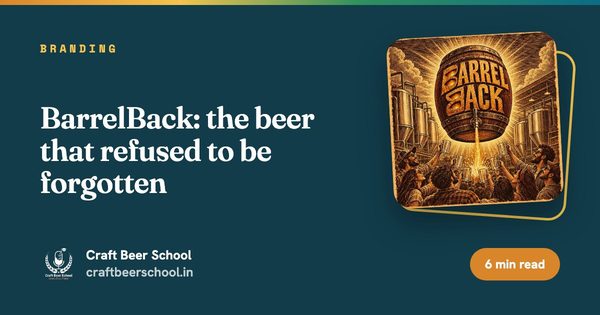
No cape. No secret identity. Just a brilliant brew, a loyal following and unfinished business with the world.
Three well drawn drinkers will guide your rebrand better than a slide that says "25 to 40, urban, aspirational".
Your brewery wants to launch a hard seltzer. Does it carry your name or its own? Two questions settle it.
Before you pay a designer to change your brand, find out which parts of it your drinkers already carry in their heads.
Two to five words your whole team can repeat. Getting there takes about ten conversations and a ruthless edit.

Tap handles, coasters, a WhatsApp reply. Drinkers meet your brand in at least 20 places. Do they all sound like you?

Your beer has a recipe sheet. Your words probably do not. Here is a one-page fix.

Great beer is the entry ticket. It is no longer the reason anyone picks yours off a 12-tap board.

Most new breweries start with the logo. Here is the order that saves you paying for it twice.
Guests forget your logo. They remember who poured their beer and how.
Most brewery values could hang in any office. Here is how to write ones that settle an argument in the brewhouse.
The name you have loved since your first homebrew is probably taken. Here is how to find one you can keep.

Draw your market on two axes and you will see where you stand, who is crowding you and which empty corner deserves a closer look.
A rebrand is seven jobs in a fixed order. Skip one and the designer ends up guessing on your behalf.

A rebrand with twelve decision makers ends with a logo nobody hates and nobody loves. Start with four to six people and a number in rupees.
A good design partner makes the first year easier. A poor one can eat it. Here is how to pick and brief the right one.
The name goes on every can, sign and invoice for years. Test it before you print it.

Eighteen labels in year one, each designed from scratch? There is a cheaper way that also looks better in the fridge.
Plenty of breweries that ask for a new logo really need a cleaner can and a website that loads on a phone. Here is how to tell which camp you are in.
The new logo is approved. Now the hard part: getting it onto cans, taps and phones without chaos.
"Look more premium" is not a goal. "Get the new 500 ml can into 40 more shops within 12 months" is. Here is how to write the second kind.

Guests decide what to order in the first minute. Most of that minute is shaped by where the taps, the menu and the light are.

The festive months are the busiest of the year for most taprooms. The planning starts long before the first diya is lit.
Regulars remember the beer you stopped making. That memory is worth more than most launch budgets.

A flat brown pint on a dark table sells nothing. Five minutes of light and timing fixes most of it.
Drinkers in their twenties are not rejecting craft beer. They are drinking it differently. Many brands have not noticed.

Sending free beer to whoever has the most followers is not a strategy. It rarely produces content worth the cost of the beer itself.

Packaging is often the second biggest line item after ingredients. Most new breweries underestimate it badly until the first invoice arrives.

A limited release that never actually sells out, or one that appears every other month regardless of season, stops meaning anything special fairly quickly.
A beer brand that tries to appeal to everyone usually ends up meaning nothing to anyone in particular. That is the actual risk, not being niche.

Most brewery merchandise racks are full of stock nobody wanted, ordered in the wrong sizes, in colours that do not match the brand, then forgotten within a month.
A quiz night once is an event. A quiz night every second Thursday is a reason to keep coming back. That difference is the whole point.

Most beer launches fail quietly, not because the beer was wrong, but because nobody outside the brewery knew it existed on the day that mattered.

Most brewery social media accounts post the same can photo with a different filter. Here is what to post instead and why.
You cannot run a beer television advert in most of India. Here is what that actually restricts and what it leaves open.

Every brewery says it is passionate about beer. That is not a story, it is a category description.

A can is not a flat rectangle that happens to curve. Designing it like one is the most common mistake on the shelf.
Cans and bottles do not just carry beer differently, they say something different about the brand carrying them.
A beautiful label that fails state label approval is a beautiful label you cannot legally sell.

A label has about two seconds to do its job. Most of that time gets wasted on decoration instead of information.

A great beer name that nobody can trademark, pronounce or legally print is not actually a great beer name yet.

When the glycol chiller trips at 2 am with five tanks of lager fermenting, the brewer calls one person. That person is the maintenance engineer.

In most industries, brand managers can buy a TV advert. In Indian beer, they mostly cannot. That changes the whole job.

Recruiters search LinkedIn for words like brewer, fermentation and packaging. If those words are not on your profile, you do not exist to them.

Most beer trainers do not start as trainers. They start as the person in the bar who explains beer better than anyone else.

Hosting tastings sounds like the dream job. The real work is product knowledge, trade relationships and a lot of travel.

Sommeliers are made on the restaurant floor as much as in the classroom. Here is the honest route in.

At a large brewery you might spend a year learning one section properly. At a brewpub you might do every job in your first week.

Head brewers read CVs fast and ask practical questions. Here is how to be ready for both.

Both start with fermentation. After that the two jobs pull apart in pace, scale and the kind of person they suit.

Your degree already covers half of what a brewery lab needs. The other half is learning what beer does to microbes.

You get to see the inside of more breweries in a year than most brewers do in a decade. The catch is that you have to understand all of them.

The same job can carry three titles in three breweries. Here is what each one usually means.

The brewhouse gets the photos. The cellar and the packaging line are where most brewers actually learn the job.

Drinks companies have plenty of data and not enough people who understand both the numbers and the beer.

You already know how to read a guest and pour a pint. That is a better start in beer than most people get.

You trained to run a floor, a kitchen and a team. A taproom needs all of that, plus someone who understands the beer.

Harvest in Nashik runs while most of the world's vineyards are resting. Here is who does what in an Indian winery.

Quitting first and learning later is the expensive way round. There is a slower route that works.

A brewery is a food plant full of pumps, heat exchangers and control loops. Engineers often feel at home faster than they expect.

The salary figure is only part of the offer. The joining terms decide how the job feels six months in.

The General Certificate is the first rung of the IBD ladder. It rewards steady study more than brewing experience.

Brewing looks calm on Instagram. On a May afternoon next to a boiling kettle it feels very different.

A brewing degree in Germany or Scotland, a science degree at home or a short course first. Each one suits a different person.

Beer, whisky and wine all depend on farm crops, glass, cans and trucks arriving on time. Someone has to plan all of it.

Plenty of brewers started late. The ones who made it planned the move instead of jumping.
Nobody expects you to design a recipe on your trial shift. They are watching how you hold a hose.

Brew day is one day. The other six are spreadsheets, tank juggling, tasting panels and a pump that will not prime.

Brewing in India has deep roots in women's hands. Here is practical advice for women building a career in it today.

Plenty of Indian brewers want a stint in Germany, Australia or the UK. The ones who get there plan the qualification and the visa together.

Some people are paid to taste. Most of the job is turning a taste into data someone can act on.

Every brewery depends on malt and hops. The people who make and sell them have careers of their own, often with steadier hours.

A distillery is a brewery with a still on the end. Most of the jobs and most of the skills overlap more than people expect.

Very few people are paid only to write about beer. Plenty are paid to write about it some of the time.

Level 1 or Level 2? Is the Diploma worth it? Here is what each WSET wine level asks of you and what it gives back.

Every tank, can and keg passes through someone's hands before it is released. That someone has an interesting job.

Our own instructor, in the MBAA Technical Quarterly. What the Master Brewers Association is, what his peer-reviewed article says and where to read it.

Six hours of guided learning, one closed-book exam. If yours is close, there is still time to get ready in a room with a tutor.

Nine years in brewery R&D, then a second career in data and AI. Meet the instructor who teaches both sides of the brewhouse.

Every pour at the Tricity's oldest microbrewery starts on his brew deck. Meet Gagan Deep, brewmaster at Hops n Grains.

Most brewery internships in India are never advertised. Here is how people actually get them.

It is a production job with a science base and an early alarm. Here is the honest route in.

You do not need to know how to brew to sell beer well. You need to understand the product, the accounts and the numbers behind both. That is a learnable set of skills.

Homebrewing teaches you real fermentation science, but a five gallon batch and a five hundred litre one behave differently in ways that surprise a lot of confident homebrewers.

A beer sommelier is not a brewer with a fancier title. It is a distinct skill built on tasting, describing and pairing beer accurately. It opens doors a brewing job does not.

The job listing says fermentation and quality control. The actual day is a lot of lifting, cleaning and paying close attention to numbers most customers never see.

A brewery is not just a head brewer and some kegs. It is a small factory, a lab and a hospitality venue. Each of those needs different people doing different work.

Ask ten brewers whether you need a degree and you will get ten different answers, mostly based on how they got in themselves. Here is what actually changes between the two paths.

A BJCP judge is not just someone with an opinion about beer. It is someone trained to score a specific beer against a specific style, consistently, under time pressure.

WSET is best known for wine, but its beer qualification brings the same structured, systematic tasting approach to a category that badly needed one.

Cicerone is often called the sommelier certification for beer, but it is really built for the floor: serving, storing and selling beer properly.

Cicerone, WSET and BJCP get lumped together constantly, but they test different skills for different reasons. Mixing them up wastes time and money.

A seltzer at 2.2 volumes tastes flat. At 3.8 it gushes. How to hit the number and hold it to the shelf.
Most wine spoilage starts in a hose, a valve or a barrel nobody cleaned properly.

Hop water is the easiest non-alcoholic drink a brewery can make. Getting it to smell great in week six is the hard part.
Toasted coconut smells wonderful in a stout. Its oil quietly flattens the foam. Here is how producers get the flavour without the problems.

The closure decides how much oxygen reaches your wine for every month it sits in the bottle.

A recipe that sells out can still lose money. Cost it on paper first and you will know before the malt is milled.

The glycol chiller on a sunny rooftop and the hose left running in the cellar. Two of the most expensive habits in a brewpub.

In Indian heat the warehouse matures your whisky faster and takes a bigger share of it. Design decides how much.

Indian vineyards prune twice a year so the grapes ripen in the dry winter instead of the monsoon.

A little rose tastes like a garden. A little too much tastes like a bar of soap. Here is how brewers stay on the right side of that line.

India grows more interesting fruit than grapes. Turning it into stable, clean wine takes more work than crushing it.

Gondhoraj peel, tulsi and Malabar pepper can make a gin taste of India. They can also make it cloudy, bitter or flat.
More husk, more protein, smaller grains. Indian six-row barley can make fine malt whisky if you plan for it.
Your kombucha left the brewery at 0.3%. By the time it sat in a warm shop it was over 1%. Here is how to stop that.

Vanilla, cinnamon and orange peel are easy to buy. A spiced rum that tastes the same every batch is not.

A second fermentation that changes acidity, texture and aroma. Whether you want it is a style decision.
Oak flavour can come from a 225 litre barrel or a bag of chips. The wine and the cost per litre are very different.
One copper pot, run batch by batch. One tall column, running all day. They make very different whisky.

An inspector at the door should be a routine morning, not a crisis. It comes down to records that match the tanks.

Every red wine's colour and tannin come from the skins. How you work the cap decides how much you get.
Adding water to whisky sounds simple. Get the water, the speed or the timing wrong and you bottle haze.
Your RTD tasted perfect on launch day. Three months in a warm shop later, the lime tastes like turpentine.

Your yeast makes the beer. If nobody is managing it, every batch is a gamble on how it feels that week.
A small cask gives colour and oak fast. It does not give everything a big cask gives slowly.

Your casks will shape most of your whisky's flavour. Buying them is a supply chain job with a five year horizon.
Struck match, cabbage, wet cardboard, sweaty socks. Each off-note points to a step in the distillery.

Hand a new hire a hose and hope: you will be cleaning up mistakes for months. Thirty structured days fixes most of it.
No boil, no hops, two to four days. The washback is where much of a whisky's fruit is born.

Most brewery SOPs live in a binder in the office. The ones that work are taped to the wall next to the valve.

You brewed it, chilled it and paid the duty on it. Then a share of it went down the drip tray.

Summer thirst, monsoon lull, festive rush. The brewpubs that cope plan their tanks months before the crowd arrives.
Sugar water is hostile to yeast and carbon takes everything. Here is the process a brewery needs for a clean neutral base.

Your brewhouse can make more than beer. Here is how to pick the first new drink and test it without betting the brewery.
Lemonade in beer is sugar in beer. Here is how to blend a radler that does not referment in an Indian summer.

Kombucha keeps fermenting after you bottle it. Here is how to hold pH, alcohol and shelf life where they should be.

A 1.5% beer and a 4.8% lager sit in the same FSSAI class. Getting the strength right every batch is the hard part.

Your brite tanks, filler and CIP already do half the work. The syrup room, the FSSAI limits and the stability plan are the other half.

Nobody can run a 10 hl brewhouse by phone. The real choice is who stands on the floor and who stands behind them.
AI cannot taste your beer. It can tell you how much lager to brew next month, if your sales data is in order.
Multiply the pilot recipe by twenty and you get a different beer. Here is how to scale it properly.

Both sides want the same beer until a batch comes out different. Write down who decides before that happens.

There are only a few ways to take alcohol out of a drink. Each one leaves a different fingerprint on the flavour.

Most new drinks fail before launch, on the label or in the warm warehouse. A short process catches that early.

Port and sherry are both wine plus spirit. The difference is when the spirit goes in. That changes everything.

One harvest a year, grapes ripening in the heat and a licence that differs by state. Plan for all of it before you buy a press.

A cask cannot fix a bad spirit. It can only make it older.

A distillery is a brewery with a still, a bonded warehouse and a cash flow problem. Plan for all three.

Hard seltzer looks like the easiest drink to make. A clear, neutral base is harder than it looks.
Your brewhouse can make cider. The hard parts are the fruit, the sweetness and the licence.

You do not need a lab or a quality manager. You need a one-page spec per beer and checks your team actually does.

Do not start with the menu or the decor. Start by finding out which kind of trouble you are in.

Monthly accounts tell you what went wrong six weeks ago. A one-page weekly sheet tells you while you can still act.

The beer everyone wants runs dry on Saturday while a tank of the one nobody orders goes stale. Your sales data can fix that.

Every brewery loses beer between kettle and till. The question is how much, where and whether anyone has measured it.

Sales are flat or the IPA tastes different every batch. A health check finds out why before anyone changes a recipe.

Too early and there is nothing to fix. Too late and the regulars have gone. Here are the moments that matter.

Reconcile daily and a gap is a ten-minute question. Reconcile monthly and it is a week of detective work.
Same recipe, different beer. The cause is almost always in a short list. Your batch records can find it.

Most craft malt and every hop arrives by sea through a hot port. Here is how to make sure it is still worth brewing with.

Pale malt, noble hops and nowhere to hide. Here is how to make a German lager behave in Indian heat.

Every kilo of malt you fail to extract is money already spent. Here is where small brewhouses lose it.

The habits you build in the first three months are the ones you keep. Here is the order to build them in.

The fabricator says it is finished. Here is what to prove before a single kilo of malt goes in.

Your dashboard says 12.5 °P, 1.050 and 5.0%. They describe the same beer at different moments. Here is how they fit together.

Two malts at the same price per tonne can produce very different amounts of beer. Here is why.
Most brewery AI projects stall because the first one was too ambitious. Start with a problem the brewers already argue about.
Beer is not whisky. It gets worse with age. An Indian summer warehouse ages it fast.
A beer label in India answers to three sets of rules at once. Miss one and the beer does not leave the brewery.

One beer, three pack sizes, twelve states. Suddenly you have dozens of SKUs and a reporting problem.

A capex request for four new fermenters is really a claim about demand, cycle time and lager. Here is how to test it.

A fermenter temperature tag looks simple until you learn the setpoint changed on purpose and the probe was swapped on Tuesday.

A cheaper crown that lets oxygen in will cost far more in stale beer than it saves on the invoice.

Ask three people in a brewery where the batch record lives and you may get three answers. Here is the map.

Vodka is the blank page, gin writes on it and rum starts from sugarcane. Here is the rest.
Revenue up twenty percent, profit flat. In beer, the first suspect is excise.
A complaint about a flat beer from one bar in Pune might be a bad keg, a dirty line or a batch problem. The quality team's job is to find out which.
Sales says cases, the brewery says hectolitres, finance says units and the global team says barrels. They are all describing the same beer.

Hops are a farm crop with a single harvest a year, bought from the other side of the world. That shapes every contract.
The beer is brewed, packed and stacked in the warehouse. So why can nobody ship it yet?

Brewing the beer is often the quickest part. Label approvals, packaging and costings take longer than most marketing plans allow.

The same can of beer costs very different amounts across a state border. The brewery's price is only one part of that.

There is roughly six atmospheres of pressure in a bottle of Champagne. Here is how it gets there.

A truck parked in the May sun is an oven on wheels. What that does to the beer inside. Why it shows up in complaints months later.
Your revenue went up and volume went down. Before anyone celebrates or panics, check the pack mix.

That smoky, medicinal whisky everyone either loves or hates? The smoke went in before the barley was even brewed.
Everyone in the strategy deck says premiumisation. Fewer can say what it looks like in the brewhouse or the sales data.
ABV, °P, EBC, IBU, ppb. The spec sheet looks like a lab report. Each line is really a promise to the drinker.

Your share went up two points. Did you sell more beer, or did the panel change? How to tell.
That 650 ml bottle in your hand has probably been filled before. Possibly many times. Here is why that matters to the cost sheet.

In most industries you sell to a distributor. In Indian beer, the first customer is often the state.

Most of a brewer's carbon footprint never passes through the brewery gate. It sits in barley fields, glass furnaces and shop fridges.
In most countries beer is beer. In India, the line at about 5% ABV splits the market in two.

Most arguments about whether a wine is good are really arguments about three things you can measure.

Trade spend is often a brewer's biggest commercial cost after excise. It is also the one with the weakest evidence behind it.
A tank full of fermenting beer is worth something. Exactly how much is a question finance and brewing often answer differently.

A brewer's CV can look thin on paper and be brilliant on the floor. Here is how HR can tell the difference.
The brewhouse made 100 hectolitres. The warehouse received less. Where did the rest go?

A 12 year old whisky can contain spirit far older than 12. It can never contain anything younger.
An ale can be ready in two weeks. A proper lager can take four to six or more. Finance pays for every one of those days.
You have read about beer in spreadsheets for months. Now you are standing in a brewhouse. Here is how to make the visit count.

Summer sells the beer. January decides whether you have any to sell.

In a drinks company, excise can be a bigger number than the cost of the liquid. Here is how it moves through your books.

A litre of beer uses several litres of water. Most of it never goes into the beer. Here is where it goes instead.

Laptop, ID card, policy videos. Then a new joiner sits down to forecast a product they have never seen made.

Your GCC team can build a flawless report on a product nobody in the room has seen being made. That is the problem.

The useful AI projects in a drinks company start with a tank, a cask or a vineyard. The failed ones start with a model.

A good workplace tasting teaches the portfolio. Nobody should leave it any different from how they arrived, apart from better informed.

Why can a beer sell in one state and not the next? Because in India each state writes its own rules for alcohol.

Beer takes weeks, wine waits for one harvest a year and whisky sits in a cask for years. That difference runs your whole planning calendar.

Musty, vinegary, cooked or flat. Each fault points to a different place in the chain and to a different fix.

Two labels, same grape, very different wines. The split between Old World and New World explains why.

Chilli and a big tannic red make each other worse. Here is what works instead and why.
A wine can leave the winery in perfect shape and arrive cooked. Most of the damage happens in transit and on the shelf.
Your dashboard says litres per tonne fell by 4 percent. Here is what that might mean in the cellar.

A wine label packs a lot into a small space. Once you know the code, most of it is easy to read.

You do not need to smell wet slate or forest floor. You need a method, a spit cup and an honest sentence.

In beer, a planner who gets the forecast wrong brews again next month. In wine, the answer arrives next year.

India grows wine grapes in the tropics, which should not work. Here is how growers make it work.

Nine grapes cover most of what you will see on a wine list or a sales report. Here is what each one tastes like.

Same grapes, four very different wines. The difference is mostly about skins, time and bubbles.

Beer can be brewed any week of the year. Wine gets one go. It starts in a field.
No two casks taste the same. A whisky brand has to taste the same every year. The blender sits in between.

Most Indian whisky starts as neutral spirit from molasses or grain. The choice shapes taste, export rules and the cost line.
Why does a distillery report litres of pure alcohol instead of litres? Because the bulk volume keeps changing while the alcohol mostly does not.

Whisky tasting is mostly smelling. Done properly, nobody needs to swallow a drop.
A 12 year old can contain whisky much older than twelve. A small batch can be large. Here is how to read the label.

In India one whisky brand is really thirty separate businesses, one per state. Here is why.
The 12 year old you sell in 2038 has to be filled this year. Whisky planning starts from that uncomfortable fact.
Every cask loses spirit to the air each year. In India it loses a lot more and matures faster for the same reason.
New make spirit goes into the cask clear and fiery. Years later it comes out amber and calm. Here is what the wood did.

Each country's whisky is defined less by taste than by a rulebook. Learn the rules and the flavours start to make sense.

Single malt does not mean one cask. Grain whisky is not neutral spirit. Most whisky is a blend of the two.

The first half of making whisky looks a lot like brewing beer. The second half takes years.

The forecast was fine. Then it was 42 °C for ten days, a state revised prices and there was a dry day. Here is how to model that.

If your brief says "crisp, refreshing lager", it helps to know what makes a lager crisp. A style primer for marketers.

Wort, Plato, CCT, bright beer, depletions. The words you will hear in your first week, explained once.
Shipments went up. Depletions went down. Both numbers are right. Here is why.

Mainstream, strong, premium, wheat, alcohol free. Every brand in a beer portfolio has a job to do.

The packaging line is where breweries lose most of their hours. OEE is how they count them.

Your quality table has forty columns. About eight of them decide whether the beer ships. Here they are.

The bottle often costs more than the beer inside it. Here is how a beer cost sheet really breaks down.

Your plan says brew 400 hectolitres more. The fermenters say otherwise. Here is how brewery planning really works.
A bottle of lager has passed through a farm, a maltings, a brewery and a state depot. Here is the route.
Extract yield, beer loss, hl/hl water. What the numbers in your brewery dashboard are actually measuring.

You build the dashboards for a beer company. Here is what actually happens behind every row.
Every guide here is a slice of what we teach properly, with mentors, tastings and real brewhouse time.
See the courses