Weyermann Chocolate Rye malt: roast with a spicy edge
Chocolate Rye is roasted rye malt, gentler and much lighter in colour than the roasted barley malts. Here are the spec numbers, how to dose it and how to keep a rye mash flowing.

What Chocolate Rye malt is
Chocolate Rye is rye malt roasted gently to a dark brown. Like wheat, rye has no husk, so the roast comes through without the ashy grip that husked barley roast malts can give. Rye itself brings a drier, slightly spicy grain character, which is where the reputation for a spicy edge comes from.
It sits in a different place from CARAFA. Its colour range is roughly half, so it adds more flavour per point of colour. That makes it a useful tool when you want roast and nuttiness in a beer that should stay brown rather than black.
The numbers and what they mean on brew day
- Colour: 400 to 700 EBC (151.3 to 264.4 °L).
- Extract: at least 65%, dry basis.
- Moisture: 4% maximum.
- Recommended addition: up to 5%, with higher use possible in special recipes.
The sheet gives no enzyme activity figure, so plan as if it converts nothing and let the base malt do the work. The colour is the number to notice. At 400 to 700 EBC it is well under CARAFA Type 1, so 5% of Chocolate Rye colours far less than 5% of CARAFA. As-is extract works out at about 62.4% (65 x 0.96), which matters when you enter it in recipe software.
What it tastes like
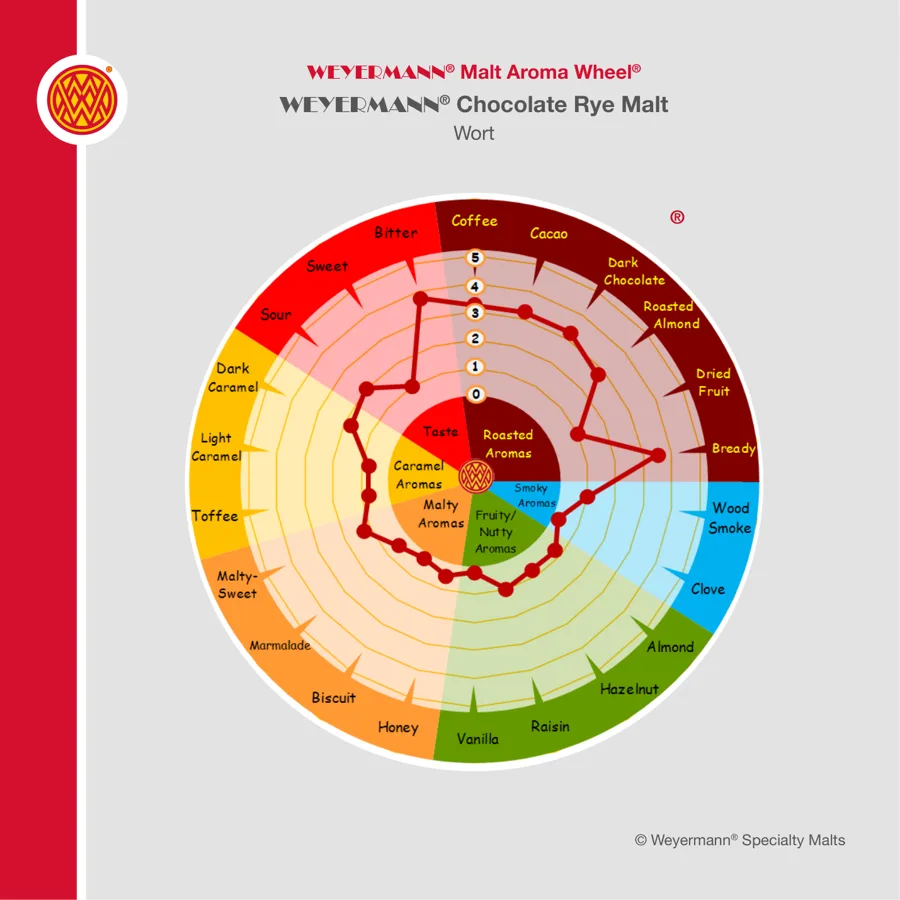
The aroma wheel below the opening section shows a wider spread than the black malts. Weyermann lists mild coffee and chocolate, then nut, nougat and bread. In practice it tastes rounder and nuttier than CARAFA, with a soft roast and a dry, grainy finish.
The spice people talk about comes mostly from rye as a grain rather than from the roast. In a beer that also has pale rye malt, the two together give a dry, peppery backbone with cocoa on top.
Taste it before you commit a full batch. A hot steep of 50 g in 400 ml of water at 65 °C for 20 minutes, strained and tasted next to the same weight of CARAFA Type 1, shows the difference in a few sips.
How much to use and how to mash it
Up to 5% is the guide. In a rye porter or a black rye pale ale, 3% to 5% works well. In a mixed grain beer, 1% to 2% adds colour and nuttiness without turning it dark. For special recipes the sheet allows more.
The mash itself is the challenge with rye. Rye contains a lot of gums (beta-glucans and pentosans) that thicken the wort. With 15% or more rye in the grist, a short rest at about 45 °C helps break them down. Rice hulls help the run-off too. On the brewhouse floor you see the problem as a lauter that runs freely for ten minutes, then slows and sets. Rake gently and keep the flow low. Dark malts also pull mash pH down, so check it once the mash is in.
Styles it suits and a worked rye porter grist
Weyermann lists multigrain beers, rye beers including black rye pale ale, kvass, traditional farmhouse beers, Russian imperial stout and chocolate porter.
A worked rye porter for 1,000 litres of 13 °P wort at about 75% brewhouse efficiency:
- Pale ale malt: 149.5 kg (65%)
- Pale rye malt: 34.5 kg (15%)
- Munich malt: 23.0 kg (10%)
- CARAMUNICH: 11.5 kg (5%)
- Chocolate Rye malt: 11.5 kg (5%)
That totals 230 kg and 100%, which puts 20% rye in the grist, enough to justify the 45 °C rest. For the pale rye itself, see our pale rye malt guide.
Using Chocolate Rye in India
The 24 month shelf life on the sheet assumes unopened bags stored dry between 0 and 30 °C. In an Indian summer storeroom that will not hold, so keep bags off the floor in your coolest room and reseal opened bags at once. Humid air softens roasted malt quickly.
Rye malt is not always on Indian import lists, so plan stock ahead. If Chocolate Rye is unavailable, Chocolate Wheat at about half the weight gives similar colour, but you lose the rye nuttiness. A swap like that changes more than colour. Judging the knock-on effect on body and roast is the core of grist design. The Weyermann malts guide shows where this malt fits in the full range.
Common questions
Is Chocolate Rye darker than CARAFA?
No. Chocolate Rye is 400 to 700 EBC, well under even CARAFA Type 1 at 800 to 1,000 EBC.
Does Chocolate Rye make a beer spicy?
Weyermann describes it as coffee, chocolate, nut, nougat and bread. The spicy note people associate with rye comes mainly from rye as a grain, especially pale rye malt.
How do I stop a rye mash from sticking?
Use a short rest at about 45 °C when rye is 15% or more of the grist, add rice hulls and keep the run-off slow.