Weyermann Spelt malt: brewing with an ancient wheat
Spelt malt lets a brewer make a wheat-style beer with a softer, nuttier character. It converts well, but its protein range is wide, so plan the mash and the clarity before you plan the label.

An ancient wheat, malted
Spelt (Triticum spelta) is a hulled wheat that was grown across Europe long before modern bread wheat took over. Southern Germany kept growing it under the name Dinkel. Dinkelbier is a small but real tradition there. Weyermann's Spelt malt is made from German quality spelt.
In the field spelt keeps a tough hull, but that hull is removed before the grain is used, so for lautering treat spelt malt like wheat malt: little useful husk in the bed. Its value in beer is a mild, nutty flavour that is gentler than barley and less tart than wheat. Indian brewers may know a relative: khapli wheat is emmer, another hulled ancient wheat.
If you are new to brewing with wheat-family grains, start with our Pale Wheat malt guide.
What the spec sheet tells you
From the Weyermann datasheet (crop 2025):
- Colour: 3 to 7 EBC (1.6 to 3.1 °L). Pale; similar to a Pilsner malt.
- Extract: at least 79.5% dry basis. Below pale wheat malt, in line with good barley malt.
- Moisture: 6% maximum. Like rye, it starts wetter than barley malt.
- Protein: 11 to 17%. Higher and wider than wheat or barley malt.
- Enzyme activity: high.
- Recommended addition: up to 60%.
The protein figure explains most spelt beer behaviour. It gives strong foam and a full body. It also gives haze and, at high use, a slower runoff. A 17% lot behaves differently from an 11% lot, so ask your supplier for the certificate of analysis for the lot you receive.
The flavour
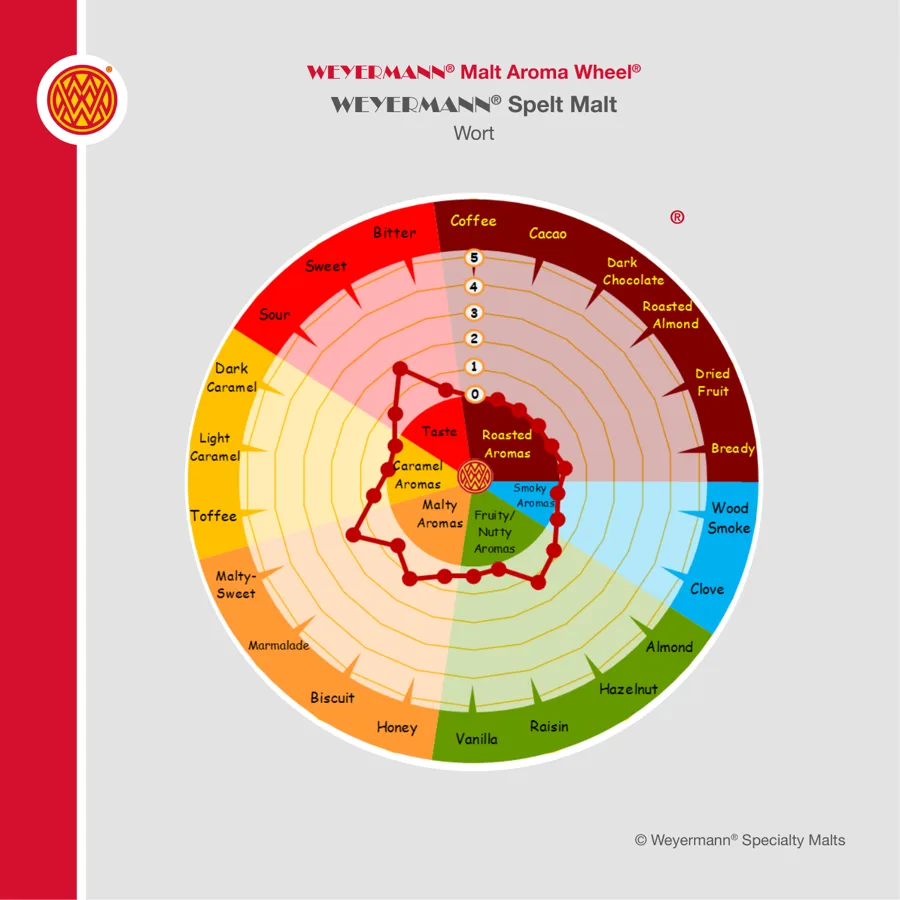
Weyermann's sensory note is short: the usual malty sweetness, with a light nutty touch. On the aroma wheel on this page the nutty and sweet groups lead, with very little else. That restraint is the point. Spelt is a grain for beers where you want softness and a faint walnut note rather than a loud malt flavour.
Next to wheat malt, spelt tastes rounder and less tart. Next to barley, it is softer and less grainy. That makes it a good partner for gentle hops and for yeast strains that bring their own fruit, since the grain stays out of their way.
How to mash it
With high enzyme activity, spelt converts itself. The job is managing protein and runoff.
- Up to 30%: a single infusion at 64 to 66 °C works. Run off slowly.
- 30 to 60%: add a short rest at 50 to 52 °C to break down some protein, then 64 to 66 °C, then mash out at 76 to 78 °C. Add 2 to 4% rice hulls.
- For a clear beer: boil hard, use kettle finings and allow time cold. Spelt beers are often served hazy, which is fine.
Watch the mash pH. High-protein grists can buffer it; aim for 5.2 to 5.6 as usual.
A worked grist: spelt ale, 20 litres
For about 12 °P (OG 1.048) at normal homebrew efficiency:
- Spelt malt: 2.40 kg (50%)
- Pilsner malt: 2.16 kg (45%)
- CARAHELL: 0.24 kg (5%)
- Total: 4.80 kg (100%)
Bitter lightly to 18 to 22 IBU. Ferment with a clean German ale yeast or a Kölsch strain at 15 to 18 °C, or with a Weizen yeast if you want banana and clove over the nutty base.
The floor detail: at 50% spelt, hold the protein rest to 10 minutes. Longer than that and you lose the foam you chose spelt for. Small changes like this, a rest length or a 5% swap, move a beer a long way. Judging them on paper is the core of grist design.
Spelt malt in India
Spelt is a specialty order. A brewpub may buy one or two bags for a seasonal beer, so storage after opening is the main risk. With a 6% moisture ceiling, spelt has little room to absorb humid air before it goes slack. Reseal the bag, store it off the floor and use it within a few weeks of opening. Unopened, Weyermann quotes two years in a dry place between 0 and 30 °C.
If it runs out, pale wheat malt is the nearest swap at the same weight. You lose the nutty note and gain a little tartness. For a drier, spicier alternative, use Pale Rye malt at a lower rate.
Common questions
Is spelt a type of wheat?
Yes. Spelt is a hulled species of wheat, Triticum spelta, grown in Europe for thousands of years.
How much spelt malt can I use?
Weyermann recommends up to 60%. Above about 30%, add a protein rest and rice hulls.
Why is my spelt beer hazy?
Spelt malt carries a lot of protein, 11 to 17% on the datasheet. Haze is normal; a hard boil, finings and cold time reduce it.
What does spelt malt taste like?
Gently malty-sweet with a light nutty note, softer than barley and less tart than wheat.