Built by hand: what Gagan Deep's first brewhouse teaches founders
When Hops n Grains opened in Panchkula, North India had almost no brewing support network. Its brewmaster, Gagan Deep, helped bring the first plant to life. That pioneering start holds lessons for anyone buying a brewhouse today.

Pioneers learn a brewhouse valve by valve
Hops n Grains opened in Sector 9, Panchkula, in 2010, by the founders' account the first microbrewery in the Tricity and the fifth in India. Founders Amritanshu Agrawal and Dr Priyanka Gupta brought in Dr S Cariappa, a brewmaster from Bengaluru, to set up and commission the plant. Gagan Deep, now the group's in-house brewmaster, has brewed for Hops n Grains since those early years.
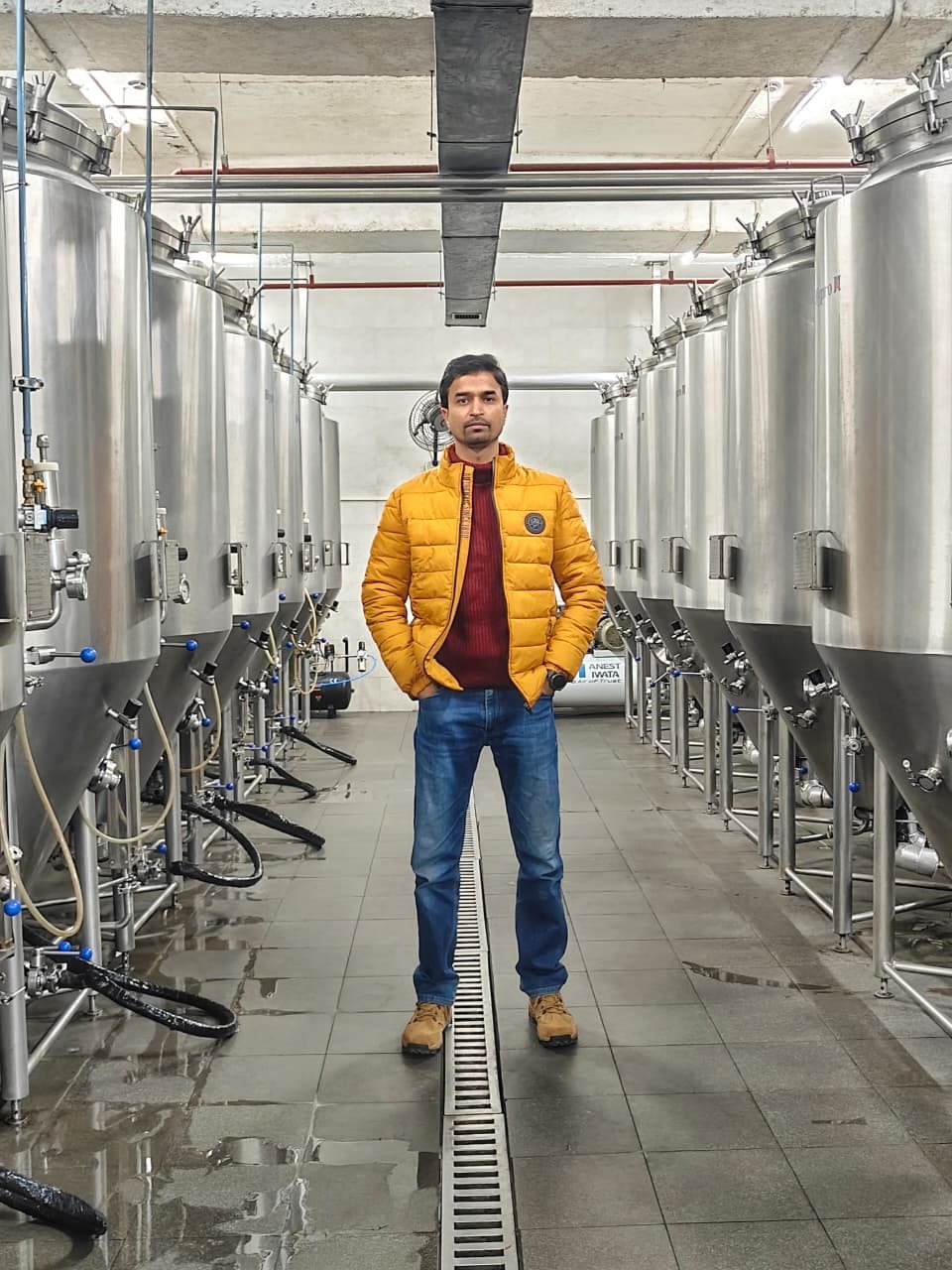
Speaking to The Tribune in March 2018, Gagan recalled the work of assembling the brewery's original imported plant. With only a handful of brewpubs in the country, the team learned the kit pipe by pipe and valve by valve. That hands-on start is how a brewmaster comes to know a brewhouse better than anyone else in the building.
Support around the plant shapes the first year
Chinese, German and Indian fabricators all build brewhouses that make excellent beer today. Most Indian brewpubs run a 5 to 10 hl (about 4 to 8.5 US bbl) brewhouse. At that size the steel is rarely the deciding factor. What makes the first year smooth is the support around it: drawings that match the site, the right spare parts on the shelf and an engineer who can service the panel locally.
In 2010 much of that support sat thousands of kilometres away. Gagan has watched it arrive. "Thankfully, now the microbrewery industry has grown by leaps and bounds," he told the paper. Today a founder can call on Indian fabricators, service engineers and consultants that simply did not exist when Hops n Grains began.
Five questions settle most of the risk
Ask these before you sign for any brewhouse:
- Who installs it? Who pays for their travel and stay if installation runs long?
- Which spare parts come with the plant? Ask for a list of gaskets, seals, valves and sensors by size and a first set of each.
- Who services the chiller, the steam or electric heating and the control panel locally?
- Are the drawings final? Do they match your floor, drains and ceiling height?
- What does commissioning include: water trials, a cleaning trial and a first brew under supervision?
Our brewhouse commissioning checklist goes through the trials step by step.
Licences come before steel
One thing has not changed since 2010. In India the brewhouse is the easy purchase. A brewpub needs its excise licence, its premises approvals and its food licence lined up before the plant can brew a single commercial batch. Haryana, Punjab and the Chandigarh administration each have their own rules for microbreweries. Those rules change, so read the current notification for your state or work with a licensing adviser. Our guide to craft beer rules in Haryana explains the process for Panchkula.
Time the plant order to the licence. Ask the fabricator for a delivery date you can move. Keep the installation team's dates loose until the approvals are in hand. A brewhouse that waits six months in a humid store picks up surface rust on its fittings. Its gaskets dry out before they are ever used.
The brewer is the best investment in the brewhouse
The clearest lesson from Hops n Grains is about people. The founders hired a senior consultant to commission the plant and a resident brewmaster to run it. Years later they still credit both, which says a great deal about how they built the business. Budget for the brewer as seriously as for the steel.
A good brewer keeps the small details of any plant in hand: a valve that needs a new seal, a temperature probe that has drifted 2 °C (3.6 °F) and needs calibrating. That steady care is what keeps a lager tasting the same in the twelfth year as in the first. Our guide on when to hire a consultant brewmaster explains how to split the budget between the two roles.
Fifteen years on, the brewmaster is the constant
Hops n Grains has grown steadily since 2010. The Great Bear followed in Chandigarh in 2016 and a second Hops n Grains opened in Mohali in 2021, during the pandemic. The group came through the 2017 highway liquor rules and the Covid closures and kept growing. Its website now describes brewing equipment handcrafted in Germany.
Through every step, the brewmaster has been the constant. Equipment can be upgraded. A brewer who knows your plant, your water and your guests takes years to develop. If you are planning a brewpub, start there: decide who will brew on the brewhouse before you choose it. Then bring them in before the crates arrive.
Common questions
Who set up the Hops n Grains brewery?
Dr S Cariappa, a Bengaluru brewmaster, commissioned the plant. Gagan Deep has brewed for Hops n Grains since its early years and is now its in-house brewmaster.
When did Hops n Grains open?
By the founders' account, in 2010 in Sector 9, Panchkula, as the first microbrewery in the Tricity. The Great Bear in Chandigarh followed in 2016 and Hops n Grains Mohali in 2021.
What should I check before buying a brewhouse?
Who installs and services it locally, which spare parts come with it, whether the drawings match your site and what commissioning trials are included.